
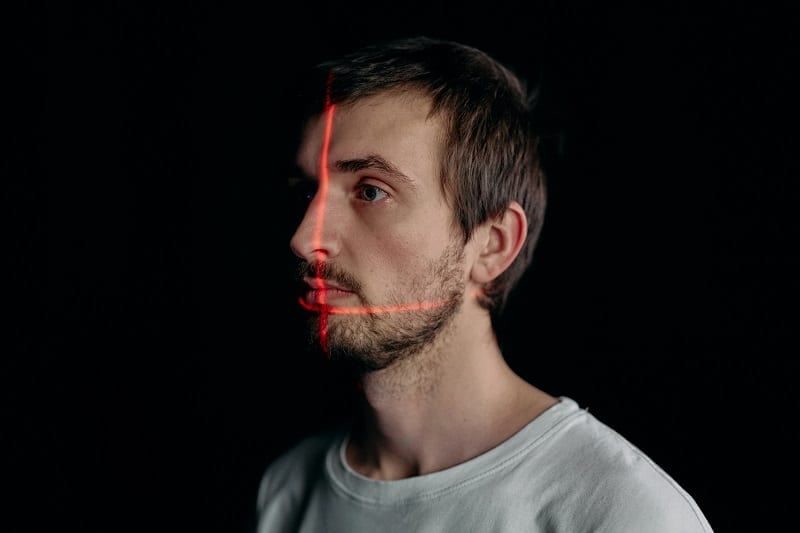
Face recognition software has grown more commonplace in several fields, including security, advertising, and law enforcement. The program analyzes facial traits using complex mathematical methods to confirm a person’s identity. The higher quality of the software’s source code directly correlates to its reliability. The complexity of the artificial intelligence code used in facial recognition software will discuss, along with its impact on the reliability of the software. Additionally, we will talk about how regulatory agencies like NIST test the software.
Facial recognition software uses extensive and advanced artificial intelligence programming. The software can identify a person in a photo by comparing their likeness to a database of people already in existence. Lighting, poses, facial expressions, and props like hats and spectacles are just a few examples of the many variables the program must account for. The software has to correctly extract and categorize facial traits, and then check them against a database of previously recognized human faces.
The most popular machine learning methods for face recognition are support vector machines (SVMs) and neural networks. The SVM method uses in supervised learning, and it finds a hyperplane that divides the data into classes. SVM may use to determine whether a fresh face picture belongs to a previously recognized individual.
On the other hand, the structure of neural networks inspires the brain and consists of several layers of linked nodes. Neural networks may extract and categorize aspects of a face, and then compare those elements to a database of previously recognized faces.
Face Recognition Software Evaluation
Testing by regulatory agencies like NIST ensures the accuracy and dependability of face recognition software. The United States Department of Commerce’s National Institute of Standards and Technology (NIST) is a non-regulatory organization. It aids in developing new products and services by establishing uniform measuring and testing methods.
The Facial Recognition Vendor Test (FRVT) is a rigorous examination of NIST’s face recognition algorithms and systems. The FRVT is meant to test the reliability of face recognition programs in a wide range of scenarios, from different poses and lighting to varying picture quality. The growth of the system is evident with many companies participating and sharing their data like this frvt results example.
Identification, Verification, Detection, and Landmarking are the four cornerstones of the FRVT. The Identification test examines the program’s ability to identify a human face in an image by comparing it to a database of previously identified faces. Via a series of comparisons, the program is tested to see whether it can correctly identify whether or not two photographs depict the same individual. The software’s face detection and localization skills are put to the test in the Detection test. The eyes, nose, and mouth are only some facial characteristics scrutinized in the Landmarking exam. Click here to see another result example of a company that has partaken in the NIST assessment.
There are a few suggestions that may enhance the precision and dependability of face recognition systems:
- Face recognition software has to train on datasets that accurately reflect a wide range of human characteristics, including racial and gender diversity, as well as age and other life stages. This helps to increase accuracy for all demographics and decreases bias in the algorithms.
- Face recognition technology creates serious privacy problems, especially in the context of government monitoring and law enforcement. Businesses creating face recognition software have an obligation to find forthright about the technology’s applications and to make efforts to ease user privacy concerns.
- To guarantee the efficacy and dependability of facial recognition systems, it is recommended that such programs be subject to third-party testing. Testing must conduct on various datasets and environments to find algorithm bugs.
- Ethical standards should guide the development of facial recognition software. The technology must come open about its capabilities and limits to prevent discrimination and build with privacy in mind.
End Note
Complex artificial intelligence algorithms are at the heart of face recognition software, which may then be used to authenticate an individual’s identification. The code quality determines how accurate and trustworthy the program is. The AI source code uses machine learning methods and neural networks trained using various datasets to correctly identify and categorize face characteristics.