
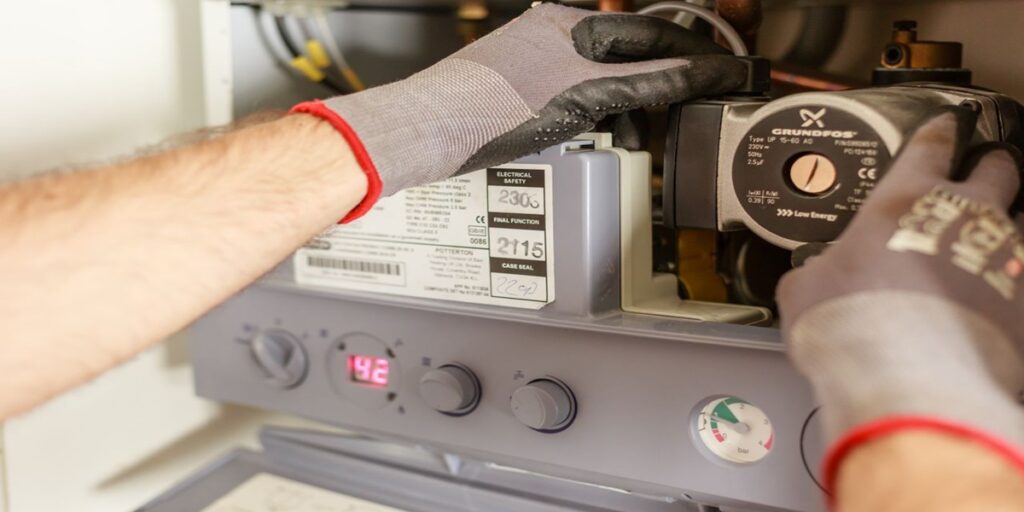
An ageing boiler may need frequent repairs or use more fuel than it once did. As these problems mount, another repair can simply delay a more sensible investment. Switching an old with a new boiler is often about balancing cost, reliability and the practical needs of your building. Rather than choosing equipment based on price or output alone, you need to consider how people use the property and how well the wider heating system works.
Recognise When Replacement Makes More Sense Than Repair
One breakdown does not necessarily mean you need a new boiler. Repeated faults, however, can make continued repairs increasingly difficult to justify, particularly when engineers struggle to source parts. Review what you’ve spent on repairs during the past two or three years. Include the wider impact of breakdowns as well as engineers’ bills. A heating failure might leave hotel rooms unusable or cause problems for tenants. If repair costs keep rising and reliability keeps falling, replacement may offer better long-term value.
Assess Your Current and Future Requirements
Do not assume that you need a like-for-like replacement. Your existing boiler could have too much capacity, while insulation improvements or changes to the building may have altered its heating requirements. Ask a qualified professional to calculate the building’s heat load and explain any changes you expect to make. Accurate sizing helps the boiler operate effectively without making you pay for capacity that the property rarely needs.
Choose Products That Meet Operational Needs
Consider how people use your building. An office with fixed opening hours places different demands on its boiler than a hotel which requires heating and hot water throughout the day. Choose equipment that suits these operating patterns and consider what happens when something goes wrong. A commercial property that cannot tolerate lengthy downtime might use several smaller boilers rather than one large unit. Other boilers can then provide some heat if one fails. Check whether local engineers can easily obtain replacement parts too, as good availability can shorten future repairs.
Consider Efficiency and Running Costs
The cheapest boiler to buy will not necessarily cost the least over its working life. Fuel consumption can make a substantial difference to total expenditure, especially in larger buildings. Compare seasonal efficiency figures and discuss likely energy use with your installer. Look at the controls alongside the boiler. Zoning, for instance, can stop you heating empty areas unnecessarily, while weather compensation can adjust output according to outdoor conditions.
Examine the wider heating system as well. Poor insulation or incorrectly balanced radiators can prevent an efficient boiler from delivering the savings you expect.
Plan Ongoing Maintenance
Regular maintenance helps you spot developing problems before they lead to disruptive breakdowns. It can also help you meet the manufacturer’s servicing conditions and protect applicable warranties. Create a maintenance schedule when engineers install the boiler, and keep servicing records, warranty information and repair details together. For a commercial property, arranging servicing before colder weather arrives gives engineers time to address worn components before demand increases. This approach can reduce unexpected disruption and make future maintenance easier to manage.
Build a Heating System That Lasts
A boiler replacement allows you to improve more than one piece of equipment. Think about how the controls and wider heating system work together in everyday use. Decisions that make servicing easier or reduce unnecessary energy consumption may provide lasting value. Keep accurate records and review performance periodically. By treating replacement as a long-term operational decision, you can create a heating system that remains practical and appropriate as your building’s needs change.