

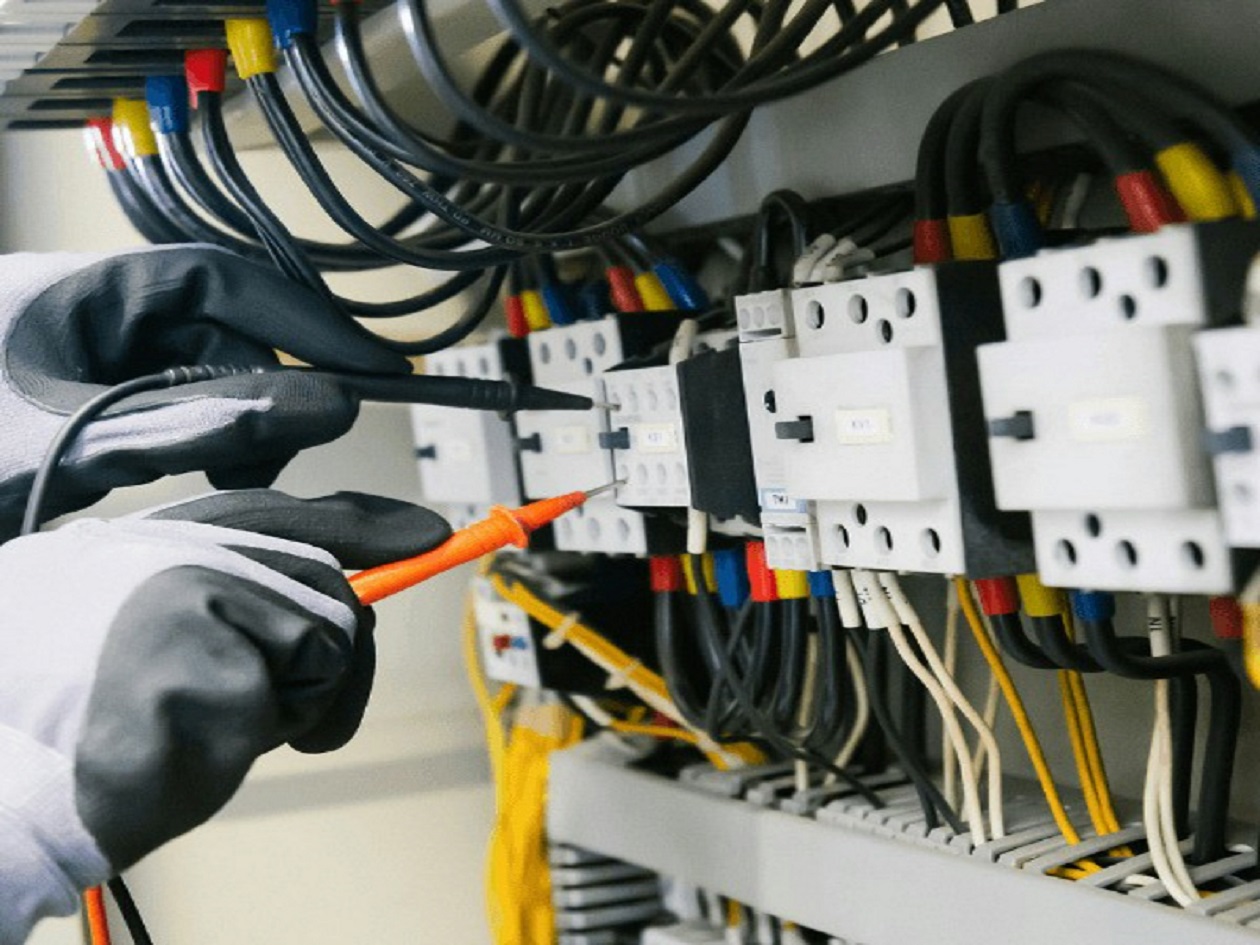
Renting out a property in England carries one duty that quietly holds the heaviest penalty of all: keeping the electrics safe. Faulty wiring rarely announces itself. It hides behind walls and inside ageing consumer units until a shock or a fire makes it impossible to ignore.
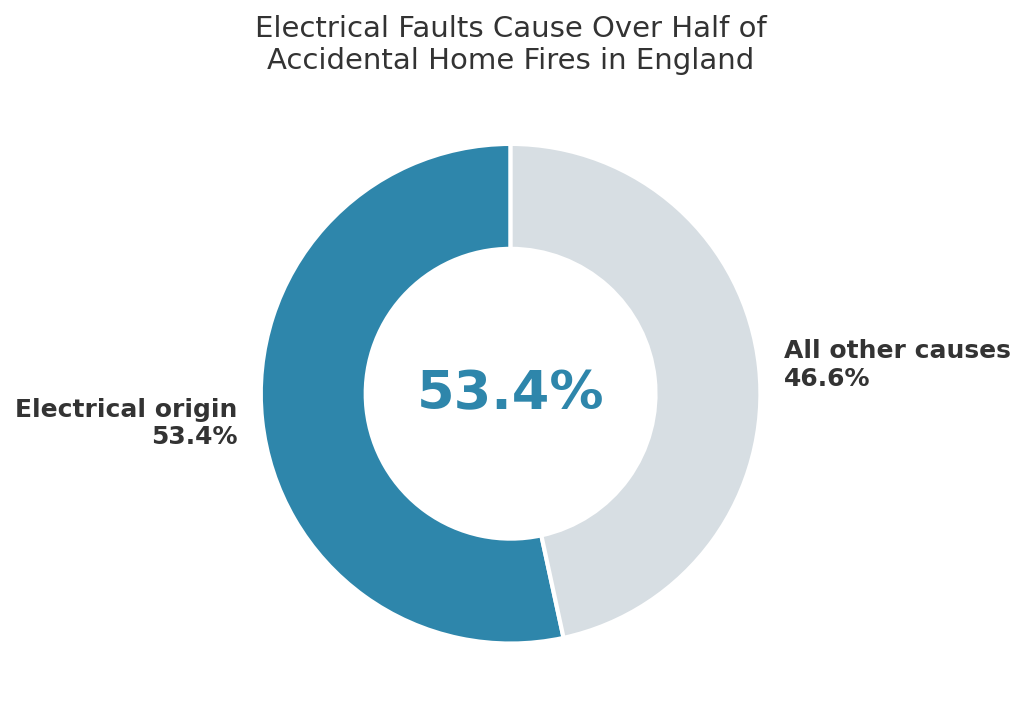
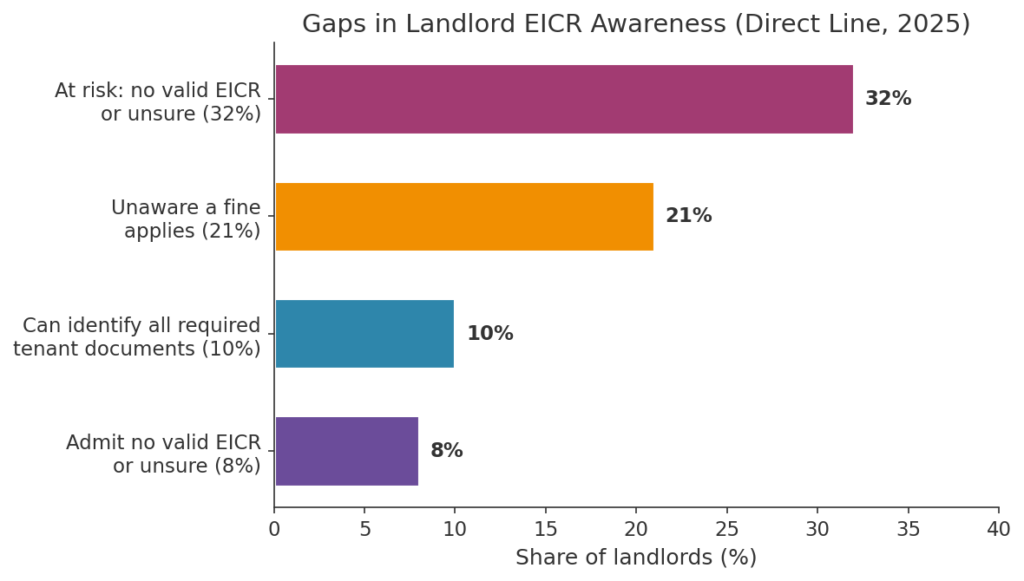
Electrical faults sit behind 53.4% of accidental house fires in England, yet roughly one in 12 landlords either lacks a valid inspection report or cannot say whether theirs still counts. Getting to grips with landlord electrical safety early protects your tenants, your insurance and your rental income. This guide explains what the law expects, what an inspection covers, and the deadlines that decide whether you stay compliant.
Key Takeaways
- Private landlords in England must have their fixed wiring inspected and tested by a qualified person every five years.
- A valid report goes to new tenants before move-in and to existing tenants within 28 days.
- Any fault coded C1 or C2 must be put right within four weeks of receiving the report.
- Non-compliance can trigger a council fine reaching £30,000 for each property.
- PAT testing is compulsory for HMOs only, and stays good practice for every let.
What the electrical safety law requires
The Electrical Safety Standards in the Private Rented Sector (England) Regulations 2020 set the core duty. Every fixed electrical installation in a rented home must be inspected and tested at least once every five years by someone qualified and competent. The landlord then receives a written report, shares it with tenants, and supplies a copy to the council on request.
This builds on older law. Section 11 of the Landlord and Tenant Act 1985 already held owners responsible for keeping wiring in repair, but the 2020 rules turned that broad duty into a firm testing schedule. Work must satisfy the national standard, BS 7671, known as the 18th edition wiring regulations.
| 📍 Scope note: These regulations apply to England only. Scotland and Wales operate their own electrical safety rules for rented homes, so confirm the requirements for the nation your property sits in. |
For the full legal wording, including the duties owed to local authorities, the official government guidance walks through each obligation in plain terms.
Do you need an EICR, an EIC, or both?
Most landlords need an Electrical Installation Condition Report. An EICR is a periodic safety assessment of an existing installation, where an electrician inspects the wiring, consumer unit, sockets and fixed equipment, then grades the whole system as satisfactory or unsatisfactory.
A newer property is the exception. If your rental was built or fully rewired within the past five years, the Electrical Installation Certificate issued at that time acts as your valid record. An EIC confirms the new work met the standard. Once five years pass, a fresh EICR takes over.
What an electrical safety inspection covers
This inspection examines the fixed parts of the installation, not the appliances a tenant plugs in. The qualified assessor checks everything wired directly into the supply, hunting for fire risks, shock hazards and signs of wear.
A typical inspection looks at:
- Wiring and the consumer unit, the modern name for the fuse box
- Plug sockets and switches
- Light fittings and ceiling roses
- Extractor fans and electric showers
- Earthing and bonding arrangements
- Anything permanently connected to the mains
Electrical faults cause more accidental home fires than every other source combined, 53.4% of the English total.
The stakes are easy to underestimate. Electrical hazards drive over half of all accidental fires in English homes, a pattern confirmed by the latest fire data from the national charity tracking these incidents.
Watch: Video: “EICR Explained: Everything You NEED To Know”. Watch at https://www.youtube.com/watch?v=2iHLYXxEkig. This short explainer walks homeowners, landlords and managers through what an inspection assesses and why the report matters.
Understanding EICR codes: C1, C2, C3 and FI
Once testing finishes, the report uses standard codes to flag any problem found. These codes decide whether your property passes and how quickly you must respond.
| Code | What it means | Action required |
|---|---|---|
| C1 | Danger present, with a real risk of injury | Immediate action; the electrician may make it safe on the spot |
| C2 | Potentially dangerous | Urgent repair, normally inside the four week window |
| C3 | Improvement recommended, not a failure | Optional, though worth addressing in good time |
| FI | Further investigation required | Investigate, then put right any fault uncovered |
A report counts as satisfactory only when it carries no C1, C2 or FI entries. Anything more serious renders the installation unsatisfactory until the work is done.
| ⚠ Warning: You cannot let, or keep letting, a property with unresolved C1 or C2 faults. They must be fixed and confirmed by a qualified electrician before a tenancy begins or continues. |
After repairs, request written confirmation that the installation now meets standard, often a Minor Electrical Installation Works Certificate. File it beside the EICR as evidence of compliance.
What landlord electrical safety inspections cost
Inspection pricing stays modest next to the risk of skipping it. Most domestic checks fall between £100 and £250, with a small flat near the bottom of that band and a larger house at the top. London and the South East often sit higher.
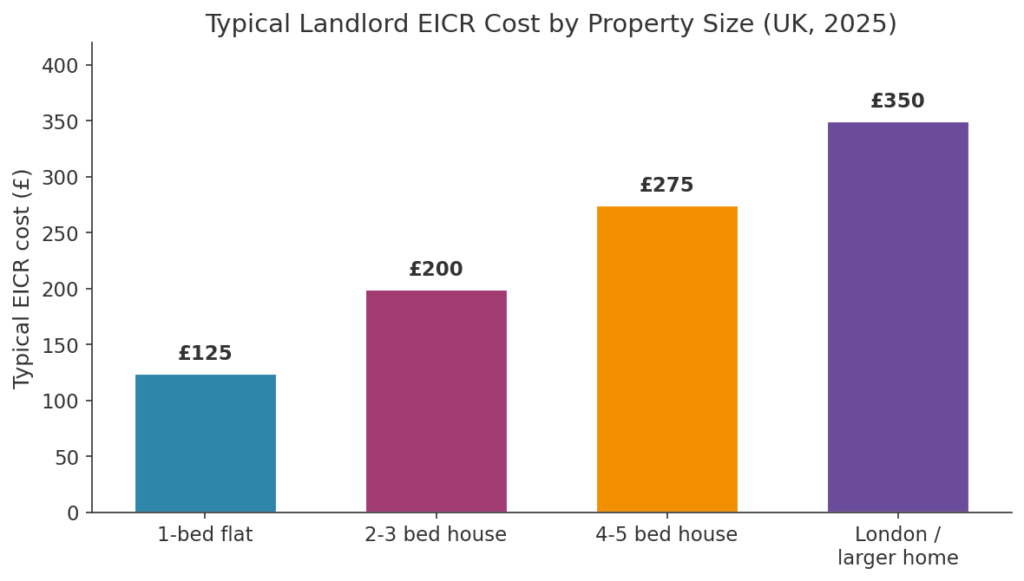
Several factors move the figure: property size, the number of circuits, the age of the wiring and how complex the consumer unit is. The quoted fee covers testing and the report only. Repairs are priced separately, so build potential remedial work into your wider renovation budget when you take on an older property.
| ✅ Worth knowing: An inspection from around £100 is one of the cheapest compliance items in a landlord’s budget, and one of the most expensive to ignore. |
Deadlines and penalties you cannot ignore
The timetable around an EICR is where many landlords slip. Miss a deadline and the report loses its value, even when the wiring is perfectly sound.
| Requirement | Deadline |
|---|---|
| New tenant given a copy | Before they move in |
| Existing tenant sent a copy | Within 28 days of the inspection |
| Local authority receives a copy | Within 7 days of a written request |
| Dangerous faults (C1 or C2) repaired | Inside four weeks, or sooner if flagged |
Councils enforce these rules and can impose a financial penalty of up to £30,000 per property. Penalties apply per home rather than per portfolio, so five non-compliant properties could in theory reach £150,000.
A second sting bites too. Without a valid report, a landlord cannot serve a sound Section 21 notice, which makes regaining possession far harder.
Awareness remains patchy. Research published by Direct Line in 2025 found that nearly a third of landlords either lacked a valid EICR or were unsure of its status as the first five-year renewals fell due.
Treat the renewal as a fixed date in the calendar, much like a vehicle’s MOT, a recurring check you plan around rather than scramble to meet.
Is PAT testing a legal requirement?
Portable appliance testing is a legal requirement only for HMOs, though it is sensible for any landlord who supplies appliances. PAT checks the safety of items a tenant can unplug and move, such as a landlord-supplied fridge, oven, kettle or washing machine.
The five-yearly EICR covers fixed installations; it does not extend to these movable items. In a furnished let, a quick annual PAT check on the appliances you provide records their condition cheaply. Like other parts of routine upkeep, from keeping a home pest-free to servicing the boiler, these checks slot in best between tenancies.
Frequently Asked Questions
How often does a rental property need an EICR?
At least every five years for private rented homes in England, or sooner if the electrician advises a shorter interval. A new tenancy does not reset the clock when a valid report already exists from the previous five years.
Who is allowed to carry out the inspection?
Only a qualified and competent person, usually an electrician registered with a recognised competent person scheme. Ask for written proof of registration before booking, then store it with the finished report in case a council requests both.
What happens if my property fails the inspection?
A report marked unsatisfactory lists coded faults. You then have four weeks from receiving it to finish repairs, or less when the electrician flags immediate danger, after which you must obtain written confirmation the installation passes.
Do I need a separate report for each flat I own in one building?
Yes. Each self-contained let needs its own report covering that unit. Communal areas serving several flats need a separate inspection, normally arranged by the freeholder or managing agent rather than individual leaseholders.
Is PAT testing legally required for landlords?
Only for HMOs. For other tenancies it is advised rather than required. Testing the appliances you supply is inexpensive, reassures tenants, and proves the items were safe when the let began.
Staying on the right side of the rules
Electrical compliance feels like paperwork right up to the moment it prevents a fire or a heavy penalty. The routine is simple once it settles: book the inspection, read the codes, fix anything urgent inside the window, and pass the report to your tenants.
Keep the dates visible, line them up with your gas and energy checks, and the cycle becomes a calm part of letting. Safe wiring protects the people in your property and the value of the asset behind them.