

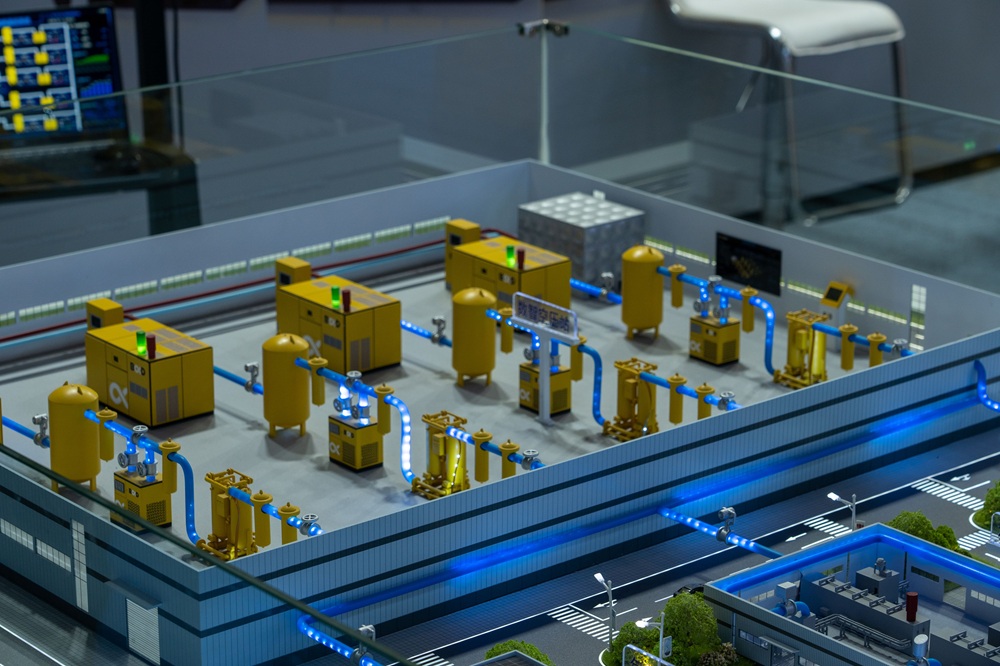
A factory manager in Ohio watches a machine fail three weeks before it actually happens. That is not science fiction. It is a digital twin at work, and it is one reason this technology has quietly become one of the most important trends in modern industry. From hospital wards to entire city grids, the same basic idea keeps showing up in surprising places.
What Exactly Is a Digital Twin?
Picture a virtual copy of something real: a jet engine, a hospital ward, an entire city block, updated constantly with live data from sensors. That is the basic idea. Instead of guessing how a system will behave, engineers and planners test changes on the digital version first, long before touching the real thing.
The technology is not new. NASA used an early version of the concept decades ago to mirror spacecraft systems back on Earth, but cheaper sensors and cloud computing have pushed it far beyond aerospace. Analysts now estimate the global digital twin market will pass 34 billion dollars in 2026, with some projections putting it well above 300 billion dollars within the next decade. The rapid climb reflects one simple fact: businesses that simulate before they build tend to make fewer expensive mistakes.
Manufacturing: From Guesswork to Precision
Factories were among the first to adopt digital twins, and the payoff has been significant. Companies using this technology report cutting unplanned downtime by around 65 percent, with asset utilization improving by roughly 62 percent.
Why does this matter so much? A single hour of downtime on a major production line can cost tens of thousands of dollars. Predictive maintenance, powered by digital twins, lets engineers replace a part before it fails rather than after. Some manufacturers report cost savings near 79 percent through this kind of forecasting, turning reactive firefighting into calm, scheduled maintenance. Automakers, in particular, now run entire assembly lines as virtual simulations first, catching bottlenecks on a screen instead of a shop floor.
Healthcare: Modeling the Human Body Itself
Hospitals have taken the concept somewhere more personal: digital twins of actual patients. Surgeons rehearse complex operations on a virtual replica of a patient’s heart before ever picking up a scalpel. Drug companies simulate how a new compound might behave in thousands of virtual patients, cutting years off testing timelines.
The healthcare segment of this market is growing fast, moving from roughly 2.8 billion dollars in 2025 toward nearly 3.7 billion dollars in 2026, with personalized-treatment twins expected to account for close to 29 percent of the market by 2035. Mental health support is part of this shift too. Many patients, especially teenagers, would rather talk on anonymous chat online with a peer support group than sit across from a stranger in an office, and hospitals are beginning to weave these tools into their digital-twin-based care platforms.
Smart Cities: Rehearsing Urban Change Before It Happens
Entire cities are now getting the same treatment. Singapore, Shanghai, and several European capitals maintain live digital replicas of their streets, utility grids, and public transport networks. Planners can simulate a new subway line, a flood, or a shift in traffic patterns without disrupting a single real commuter.
The results are measurable. Public infrastructure programs using digital twins saw capital and operational efficiency gains of 20 to 30 percent in 2025 alone. That is not a small number when a single transit project can cost billions. Even wastewater systems and power grids are getting digital counterparts now, since a leak or outage caught in simulation never has to happen in real life.
Citizens Are Part of the System, Too
Smart cities are not just pipes, sensors, and traffic lights. They are built around the people living in them. Local governments have started pairing infrastructure dashboards with community platforms, giving residents a direct line to flag problems.
Some cities are piloting apps for anonymous group chats so neighbors can discuss safety concerns, report issues, or weigh in on zoning decisions without attaching their name to every comment. It is a small addition, but it closes the loop between the data a city collects and the people that data is meant to serve.
The Roadblocks Nobody Talks About Enough
None of this comes cheap or easy. Building a functioning digital twin requires sensors, computing power, and skilled staff—a combination still out of reach for many smaller manufacturers and municipalities. There’s also the matter of trust. If you try opening a CallMeChat platform and starting a video chat with people in Singapore or Germany, it’s easy to see that the level of trust in their government is quite high. But integrating digital twins in countries with problems in key institutions, high corruption, low digitalization of the banking sector, and a high percentage of cash is much more difficult and time-consuming.
These systems handle enormous volumes of sensitive data, from patient records to city infrastructure blueprints, which makes cybersecurity a constant concern. Then there’s fragmentation. Too many platforms speak different digital languages, and there’s still no universal standard for how a twin should be built or shared between systems. Until that gets sorted out, some of the promised efficiency gets lost in translation. Smaller organizations, in particular, often need to bring in outside specialists just to get a pilot project off the ground.
Where This Technology Is Headed
Artificial intelligence is quickly becoming the engine behind the next generation of digital twins. Rather than simply mirroring reality, AI-enhanced twins can predict outcomes and suggest fixes on their own. Some researchers estimate this pairing speeds up AI deployment by as much as 60 percent while trimming operational costs by up to 15 percent.
Expect twins to keep spreading into smaller businesses, regional hospitals, and mid-sized towns over the next few years, not just the largest corporations and capital cities. The technology started as a tool for aerospace engineers. It is quickly becoming something closer to standard infrastructure, sitting quietly behind decisions in factories, clinics, and city halls alike.
None of it replaces human judgment. What it does is give planners, doctors, and engineers a safer place to be wrong first, so the real world does not have to pay for their mistakes.