


How Many Oz Is a Half Cup?
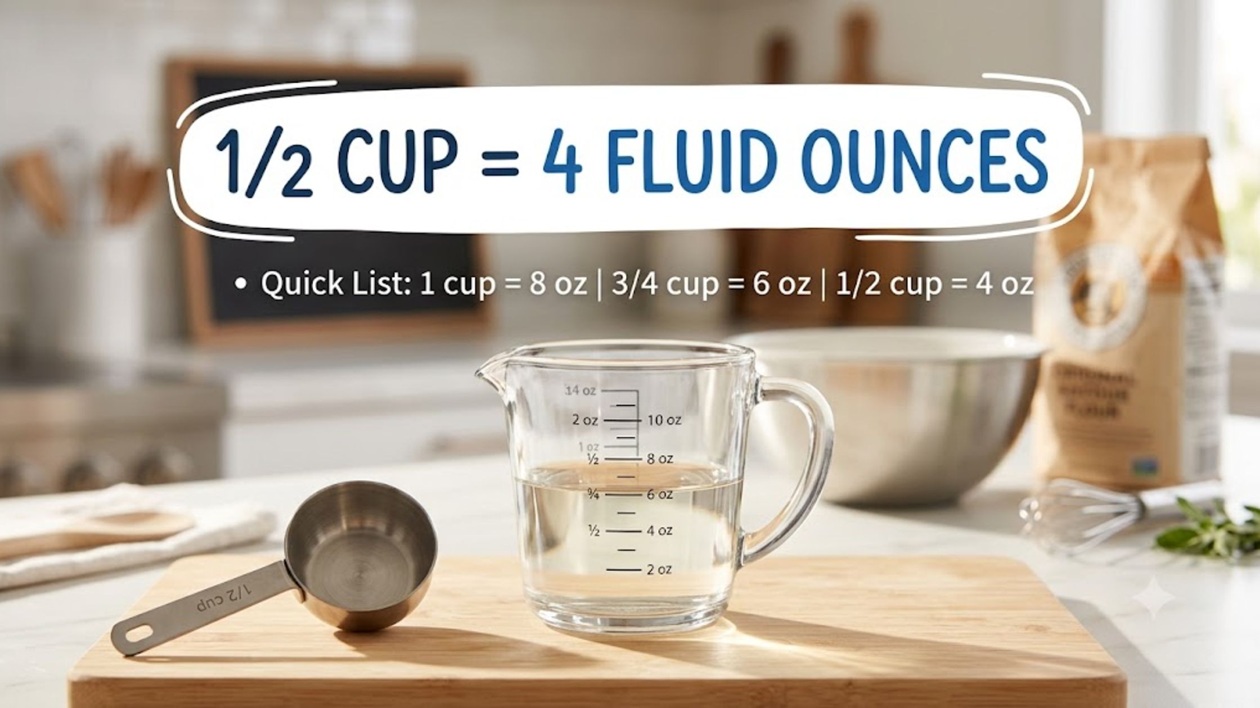
You stand in your kitchen; a recipe calls for “half a cup,” and your only measuring tool shows ounces. Don’t worry, the answer is straightforward. A half cup equals 4 fluid ounces. This conversion applies to liquid ingredients like water, milk, oil, and broth, and it stays consistent across every US recipe you’ll ever follow.
The US customary system builds cups and fluid ounces on a clean, predictable ratio. One full cup always equals 8 fluid ounces, so cutting that number in half gives you exactly 4 fluid ounces for a half cup. You don’t need to memorize complicated maths here; the relationship stays fixed no matter which liquid you measure.
💧 Cups to Ounces Calculator
Why This Conversion Trips People Up
Confusion creeps in when people mix up fluid ounces with weight ounces. Fluid ounces measure volume, while regular ounces measure mass or weight. Water happens to weigh close to 8 ounces per cup, so the two numbers often overlap for water-based liquids. But ingredients like flour, sugar, or shredded cheese don't follow this same rule, because their weight per cup changes based on density.
For example, a half cup of all-purpose flour weighs around 2.13 ounces by weight, even though it still equals 4 fluid ounces by volume. This distinction matters most in baking, where precise measurements affect texture and rise. When a recipe says "half cup of flour," it almost always means volume, not weight, unless the recipe specifically states otherwise.
Quick Reference for Common Cup Measurements
You'll find these conversions useful anytime you need to scale a recipe up or down:
- 1 cup = 8 fluid ounces
- ¾ cup = 6 fluid ounces
- ½ cup = 4 fluid ounces
- ⅓ cup = 2.7 fluid ounces
- ¼ cup = 2 fluid ounces
Keep this list nearby, and you'll convert any recipe measurement in seconds without reaching for a calculator.
How to Measure a Half Cup Accurately
Grab a liquid measuring cup with ounce markings printed on the side, then pour your liquid until it reaches the 4 oz line. If you only own a dry measuring cup set, use the ½ cup scoop and fill it level with the rim. For loose or dry ingredients, spoon the ingredient into the cup instead of scooping directly from the container, since scooping tends to pack the ingredient down and throws off your measurement.
If you don't own a ½ cup measuring tool, you can also combine two ¼ cup scoops or eight tablespoons, since 8 tablespoons equal exactly 4 fluid ounces. This trick works well when your measuring set is missing a piece.
When This Conversion Matters Most
You'll rely on this conversion constantly while cooking, baking, mixing cocktails, or portioning meal-prep ingredients. Recipes from cookbooks, food blogs, and nutrition labels often switch between cups and ounces without warning, so knowing this relationship helps you follow instructions accurately and avoid measurement errors that could throw off your final dish.
Conclusion: Remember That a Half Cup Equals 4 Fluid Ounces
You now know that a now how many oz is a half cup - half cup equals 4 fluid ounces, a simple and dependable conversion that applies across nearly every liquid measurement in cooking and baking. Keep the quick reference list handy and understand the difference between fluid ounces and weight ounces, and you'll measure ingredients with confidence every time you step into the kitchen.