


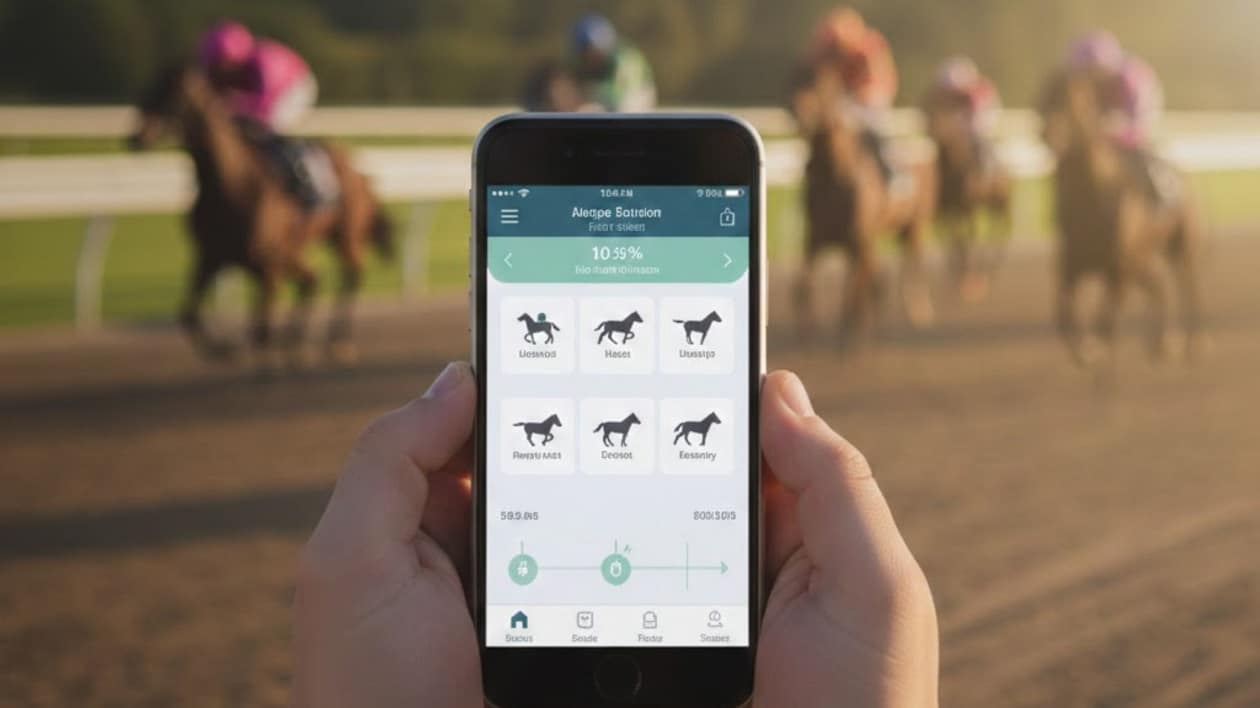
There was a time when a day at the races began with arrival. When passing through the gates, the information gradually became revealed. Race cards were folded into pockets. Odds were chalked up in places you had to walk toward. Knowledge required movement, and attention followed the body.
That rhythm has softened. Today, most people arrive already informed, or at least partially so. The shape of the day is previewed on a screen before the first horse is saddled. Names are recognised early. Expectations are set quietly, and without effort. The racecourse no longer has sole jurisdiction over context.
This change has occurred without formal announcement. There has not been a moment when racegoers collectively agreed that mobile devices would be part of the day. It has occurred gradually as the applications became sufficiently useful to remain available. What began as convenience became habit.
By the time many people reach the track now, racing betting has already been absorbed as background information rather than a prompt to act shaping how the day unfolds long before the first race is run.
The Shift From Preparation to Continuity
Race days used to be bracketed by clear edges. Preparation happened beforehand. Engagement happened on site. Reflection came later. Apps have blurred those boundaries.
Now the day stretches. You check details over breakfast. You glance again on the journey. You look once more while standing near the rail. None of these moments feel decisive on their own. Together, they create a sense of continuity that did not exist before.
This has altered how people experience time at the races. Waiting no longer feels empty. Gaps between races are filled not with impatience, but with quiet reference checking. Information drifts in and out of attention.
Information Without Urgency
What is striking is how rarely this information demands action. Most people are not constantly tapping or scrolling. They glance. They absorb. They move on.
Odds, form, weather, and running order go hand in hand, all contained within one plane of awareness. The mobile phone is a pocket reference rather than a controller of the day. It tells without commanding.
This is a subtle but important difference. Technology does not predominate the day. It supports it.
How Habits Changed Without Being Noticed
Few racegoers would say their routine has changed dramatically. They still arrive at roughly the same time. They still stand in familiar places. They still talk through races and drift away between them.
Yet the texture of those moments has shifted. Conversations are shaped by shared information accessed moments earlier. Questions are answered quietly rather than debated at length. Uncertainty has narrowed.
This has made the race day feel smoother, if less dramatic. Fewer surprises arrive unannounced. More things feel anticipated, even when outcomes remain unpredictable.
The Second Screen Effect
Watching a race is still a physical act. You follow the horses with your eyes. You react to movement and momentum. But the phone has introduced a second layer of observation.
You are no longer only watching what is happening. You are aware of how it fits into a larger pattern. The result matters, but so does how it aligns with what you already know.
This dual attention does not diminish the spectacle. It reframes it.
A Quieter Kind of Engagement
One unexpected effect of this shift has been a calming of the race day atmosphere. When information is readily available, there is less need to chase it. Fewer people rush. Fewer conversations feel urgent.
Engagement becomes quieter and more sustained. People stay longer. They linger between races rather than retreating entirely.
The app does not pull attention away from the track. It allows attention to rest.
What Has Been Lost and Gained
Something has been lost, of course. The thrill of discovering information late. The drama of misreading a situation. The arguments that arose from incomplete knowledge.
But something has been gained as well. A steadier pace. A sense that the day does not need to peak constantly to remain interesting. Understanding has become cumulative rather than episodic.
Race days feel less like a sequence of jolts and more like a long narrative.
Racing in the Information Age
Horse racing has always balanced tradition and adaptation. The arrival of apps is simply the latest adjustment. They have not replaced the track, the horses, or the shared experience. They have softened the edges.
What happens now is quieter. More continuous. Less theatrical, maybe, but more lived-in. The race-day routine is intact, but it has been subtly altered, almost invisibly, by a handheld screen that requires nothing in return.