


Gambling in the United Kingdom is not just a one-time pastime activity that is associated with a weekend gamble or a big sporting occasion. It is a large economic structure that cuts across the high street betting shops, online casinos, and mobile applications. All these activities bring billions of pounds of revenue and provide huge amounts of tax income to the government on an annual basis. Under those headline numbers however, there is a more intricate tale concerning who is involved, taxing the industry, and where the money is finally spent.
Gambling participation: what the data reveals
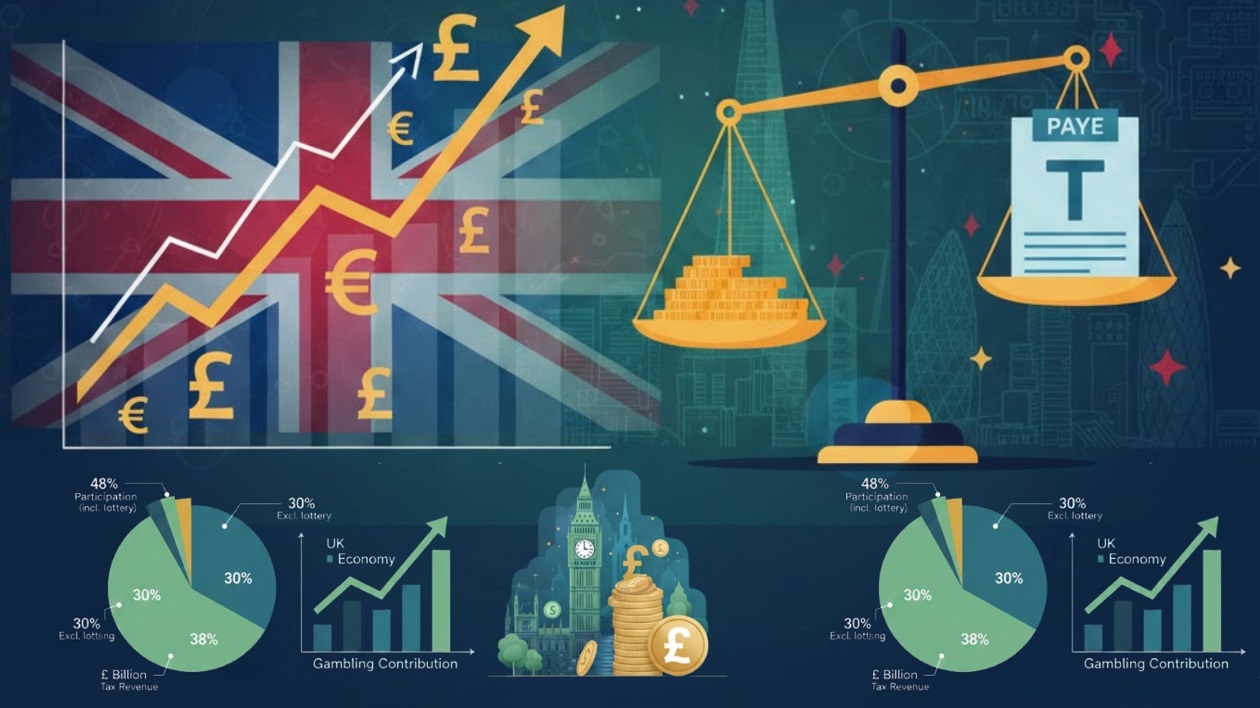
According to the national participation surveys, gambling is a common thing in the UK. Including the buying of lottery tickets, nearly half of all adults, about 48 percent, report engaging in some type of gambling during four weeks. By eliminating lottery gambling, that number is lowered, although the participation stands at a significant 28-30%.
Remote gambling has a very significant part to play. According to a survey that was conducted recently, about 38 percent of adults stated having gambled over the internet or through mobile gadgets, and about 17 %of this population gambled not only in the lottery. These statistics suggest that gambling is not limited to a few amateurs but is part of daily life for millions of individuals.
The participation rates of adults aged 25 to 44 years are likely to increase when they are not factored in the lottery play, but when taking sports betting and online casino games, men are more likely to report that they are involved. Such trends directly contribute to the industry revenues and hence to the tax that the government receives.
How gambling is taxed — and what it generates
In contrast to other nations where players can be taxed on their fortunes, the UK imposes a major tax on the gambling operators. Remote Gaming Duty (RGD) is paid by companies, based on gross gambling yield – literally profits after deducting payments of winnings. To players, this will imply that gambling gains and losses do not have to be reported in individual tax returns.
This system has been very profitable to the Treasury. Remote gambling taxes alone in recent fiscal years have invariably brought about approximately 1 billion in annual generation. The sector pays a substantial amount of money in the government’s coffers, accompanied with other tax-related activities in the casino industry, to support other services like health care services, infrastructure, and local government operations.
To place the scale into perspective, however, according to the official information of recent years, remote gambling obligations amounted to more than 1 billion and occupied a significant part of the overall government category of other taxes and duties. What is considered by many to be a recreational activity, therefore, turns out to be a huge contributor to the state’s revenue.
Industry reaction and changing player behaviour
It is recorded that operators usually complain that the UK gambling sector is competitive and well-regulated due to the balanced tax environment. They argue that too high tax rates would squeeze margins to the extent that licensed operators cannot make appealing odds or promotions. In that case, there might be an attraction of some of the players to offshore platforms that are not regulated by the UK.
It is a concern that is often seen on the internet. Non-GamStop casinos or rather lists of casinos not on gamstop ,are mentioned in forums and even social media threads as alternatives to the larger gambling discussion. There are even some users who argue about which of the non gamstop casino is the most enjoyable. These platforms avoid paying taxes in the UK and therefore do not lead to the increase of domestic tax revenues; however, their presence indicates a difficulty for regulators in striking a balance between taxation, competitiveness and consumer legislation.
The wider economic impact
The impact of the gambling industry is not limited to the direct tax receipts. It helps in supporting thousands of jobs, especially with the high street betting shops and other services. Moreover, the betting companies are significant in sports sponsorship. Often, football clubs, horse racing, and other major leagues are sponsored at tens of millions of pounds per season, which demonstrates the extent to which the gambling industry is integrated into the business and cultural environment of the UK.
Meanwhile, the costs of social life are contrasted with economic benefits. Even though the UK has not had a special tax on harm related to gambling, policymakers still debate whether more of the gambling income ought to be channeled to prevention and treatment programs. According to some studies, in a bigger range of financial, emotional, and social effects, 3 to 9 percent of adults can suffer harm due to gambling. Such results have raised the demands of making more contributions to help the affected people through the industry.
Where policy may be heading
The current revision of the UK Gambling Act has put taxation in parity with other functions like affordability checks, advertising limits, and safeguards of vulnerable players. In this discussion, tax policy is regarded as a means of behavioural control as well as an expression of the wider regulatory agenda.
The proponents of rising gambling taxation believe that more money will bolster the community services and support safer gambling programs. Opponents respond by noting that tax pressure could be too high and lead to a reduction in the size of the regulated market as well as offshoring and thereby the implementation of regulations will no longer apply to the UK consumer.
What all this means for everyday players
To the majority of gamblers, taxation occurs in the back room. Players are not directly taxed on gambling but the taxation policy on operators affects them, both in terms of the odds available and the promotional deals and the rate of technological advancement and the strength of consumer protection.
It is easy to see how ingrained gambling is in the UK economy based on the numbers, participation rates of up to half the adult population with any form of gambling, dominance of remote gambling, and over a billion pounds of annual tax collection. It also gives reasons why policy makers, industry players and the public health lobbyists are still caught in an endless debate on finding the right compromise between revenue generation, good regulation, and player protection.