

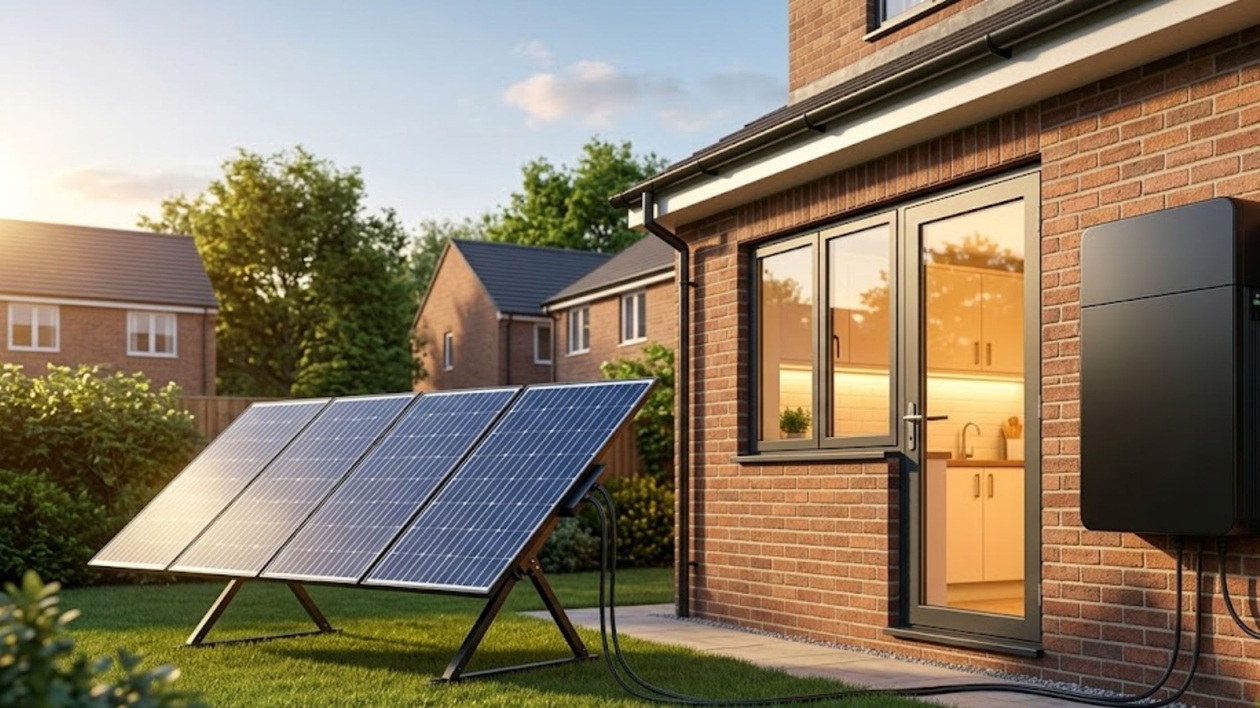
Plug in solar with battery storage lets you generate electricity during the day, store what you do not use straight away, and draw on that stored power later. For UK households, that makes small-scale solar more practical because energy demand often peaks in the morning and evening rather than at midday. A battery helps reduce wasted generation, improves self-consumption, and can lower reliance on imported grid electricity. It also adds flexibility during higher-tariff periods and can support backup power depending on system design. Understanding how plug in solar and batteries work together is the key to choosing the right setup. This guide explains the basics, the main benefits, and the features that matter most when selecting a plug in solar battery for your home.
How Plug In Solar With Battery Storage Works
From Solar Panels to Stored Energy
Plug in solar systems generate direct current electricity from solar panels, then manage that power through an inverter and battery control system. In simple terms, the solar energy produced first serves live household demand. If generation exceeds immediate use, the surplus can be directed into a battery instead of flowing away unused. The battery stores that energy for later, while smart controls monitor charging levels, output limits, and household consumption. More advanced systems increase capture efficiency by using multiple MPPT controllers to optimise solar input from different panel strings or roof orientations. This is especially useful in UK conditions, where shading and changing light levels can affect performance across the day and throughout the year.
Using Stored Solar Power After Sunset
Once solar generation falls in the evening, the battery can discharge stored electricity to power appliances, lighting, and other household loads. This shifts solar energy from daytime production to the hours when many homes actually need it most. A plug in solar battery can also reduce imports during expensive peak-rate periods, helping households use more of their own generated power. Some systems support backup operation too, allowing selected loads to run during an outage if off-grid output is available. The battery management system controls discharge safely, protects cell health, and balances performance over time. With the right setup, stored solar power can continue covering routine demand well after sunset and into the night.
Why Add Battery Storage to Plug In Solar?
Increase Solar Self-Consumption and Cut Grid Use
Adding battery storage makes plug in solar far more useful because it keeps more generated electricity inside the home. Without a battery, surplus daytime production often goes unused at the moment it is created, especially when occupants are out. With storage, that excess can be saved and used later for cooking, entertainment, laundry, or charging devices. This increases solar self-consumption and reduces the amount of electricity bought from the grid. For many households, that is the main financial benefit. It also gives more control over energy use patterns and can soften the impact of rising electricity prices. In practice, the battery helps turn intermittent solar generation into a more dependable everyday energy resource.
Store Surplus Energy for Peak-Hour Demand
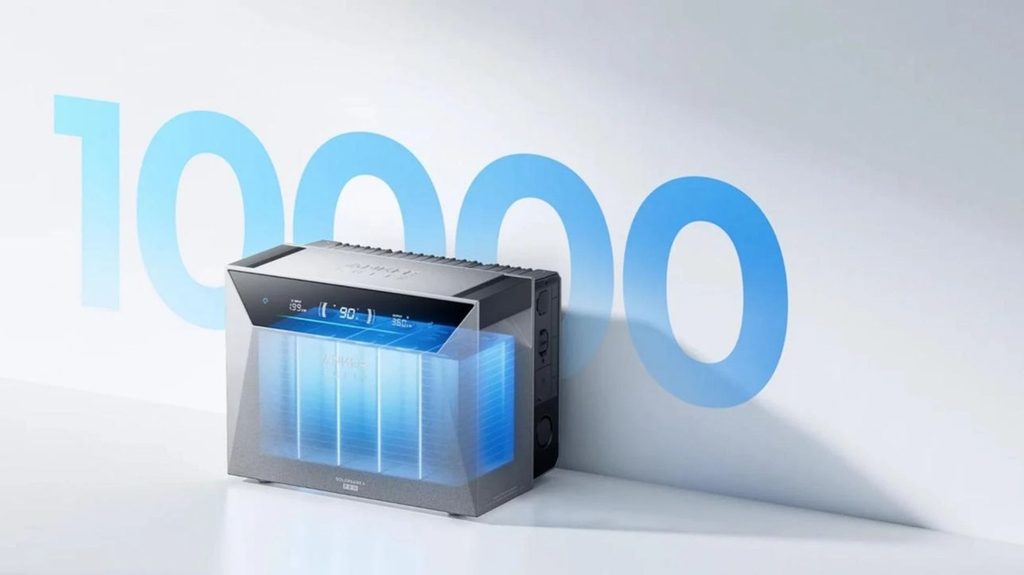
Battery storage is especially valuable when household demand rises outside solar production hours. Instead of importing electricity during the early morning or evening peak, the system can discharge energy collected earlier in the day. That can improve bill savings and make solar generation work harder across a full daily cycle. The Anker SOLIX Solarbank 4 E5000 Pro is designed for this role, with 800W on-grid output and 2,500W off-grid output. It can save up to £770 per year, with an estimated 3.3-year payback period. Battery capacity expands from 5 kWh to 30 kWh, and InfiniPower technology is designed for up to 10,000 cycles, supporting long-term daily use and stronger value from stored surplus energy.
How to Choose the Right Plug In Solar Battery
Battery Capacity, Output and Solar Input
The right battery should match how much electricity your home uses, when you use it, and how much solar generation you expect to capture. Capacity determines how much energy the battery can store, while output affects how many appliances it can support at once. Solar input matters too, because a larger or more capable system can charge faster and absorb more daytime production. Look at your evening demand, winter usage, and future needs such as electric vehicle charging. A battery that is too small will empty quickly, while an oversized system may take longer to justify financially. The best choice balances usable storage, discharge power, charging speed, and the scale of your plug in solar array.
Smart Meter, Expandability and Compatibility
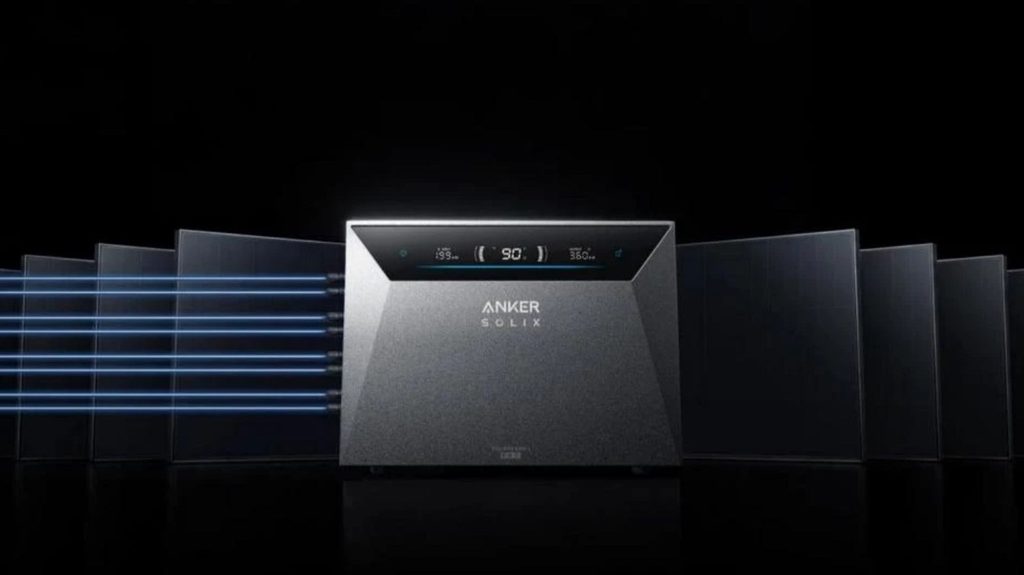
Smart features can make a major difference to everyday performance. A battery with Smart Meter Gen 2 support can enable zero-waste energy management by adjusting charging and discharge around real household demand. Compatibility also matters, particularly if the system works with a wide range of electricity suppliers and tariff structures. The Anker SOLIX Solarbank 4 E5000 Pro is compatible with more than 870 electricity suppliers and uses Anker Intelligence™ for smarter energy control. It offers 5,000W MPPT capability, 2,500W bidirectional charging, four MPPT controllers, and support for 4 to 12 solar panels. With annual energy output up to 5,586 kWh, it also leaves room to expand usage patterns over time without replacing the core system.
Conclusion
Plug in solar with battery storage is a practical way to make daytime generation more useful across the whole day. Instead of relying on solar only when the sun is shining, you can store surplus electricity and use it in the evening, overnight, or during higher-cost periods. That improves self-consumption, reduces grid imports, and gives households more control over energy bills. Choosing the right system comes down to storage capacity, output, solar input, smart controls, and room to grow with future demand. For UK homes, those details matter as much as headline savings. When sized properly and matched to your usage, a plug in solar battery can turn a simple solar setup into a more flexible, efficient, and financially rewarding home energy solution.