

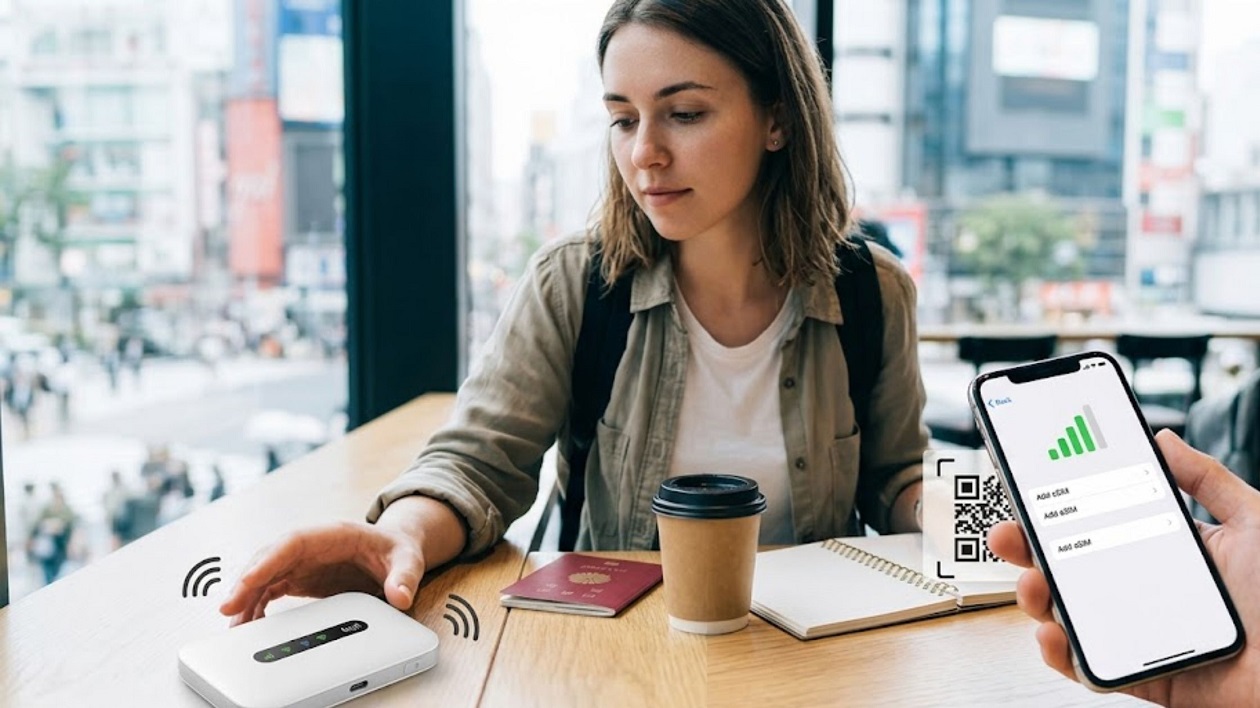
If you are deciding between pocket WiFi and an eSIM for Japan, the better choice usually comes down to how you travel. Pocket WiFi can work well for groups or multiple devices, but an eSIM is often easier for solo travelers or anyone moving quickly between cities. For most modern trips, convenience matters more than people expect.
What is the real difference between pocket WiFi and eSIM in Japan?
Pocket WiFi is a separate device that gives you internet access through a portable router. You carry it with you, connect your phone or other devices to it, keep it charged, and usually arrange pickup and return as part of the rental.
An eSIM works directly through your phone. There is no extra device, no return process, and no need to carry another charger. That simple difference changes the feel of the trip more than people expect.
A lot of this comes down to how you want your connection to behave. Pocket WiFi adds one more thing to manage. An eSIM removes that extra step.
Why do some travelers still choose pocket WiFi?
Pocket WiFi still makes sense for some trips, especially group travel. If several people want to share one connection, or if someone is traveling with multiple devices and wants everything connected through one hub, it can feel practical.
It also feels familiar to some travelers who have used it before in Japan. There is a clear sense of renting a device and using it through the trip. But the downsides show up quickly too. You have to carry it, charge it, remember it, and return it. If the battery runs low in the middle of the day, your connection becomes another problem to solve.
Why is a Japan eSIM often easier for solo or flexible travel?
A Japan eSIM is often easier because it fits naturally into the way most people already travel. Your phone is already carrying your maps, tickets, bookings, and messages. When your data lives there too, the setup feels simpler and cleaner.
It is especially useful for solo travelers, shorter trips, and itineraries that involve moving between cities. You do not need to pick up a device, return it later, or keep checking whether it is charged. A travel eSIM makes more sense when you want to move through Tokyo, Kyoto, Osaka, or beyond without carrying extra gear.
That convenience becomes even more obvious on transfer days, when you already have enough to think about.
What should travelers look for when choosing the right setup?
The best choice depends on trip style. If you are traveling as a group and want one shared connection, pocket WiFi may still work well. If you are traveling solo, moving frequently, or just want fewer things to manage, an eSIM is often the simpler option.
Jetpac eSIM fits well for travelers who want data ready before departure and do not want to turn airport arrival into another errand. It works naturally for trips where convenience matters more than sharing one rented device between several people. Jetpac eSIM lets you use apps like Whatsapp, Uber and Google Maps even when your data ends. It also offers multi-network connectivity and saves travellers from bill shocks
Conclusion
Pocket WiFi still has its place, especially for groups and shared-device travel. But for many travelers, eSIM is simply more convenient. It cuts out extra hardware, removes pickup and return steps, and makes it easier to move through Japan without adding one more thing to manage.