


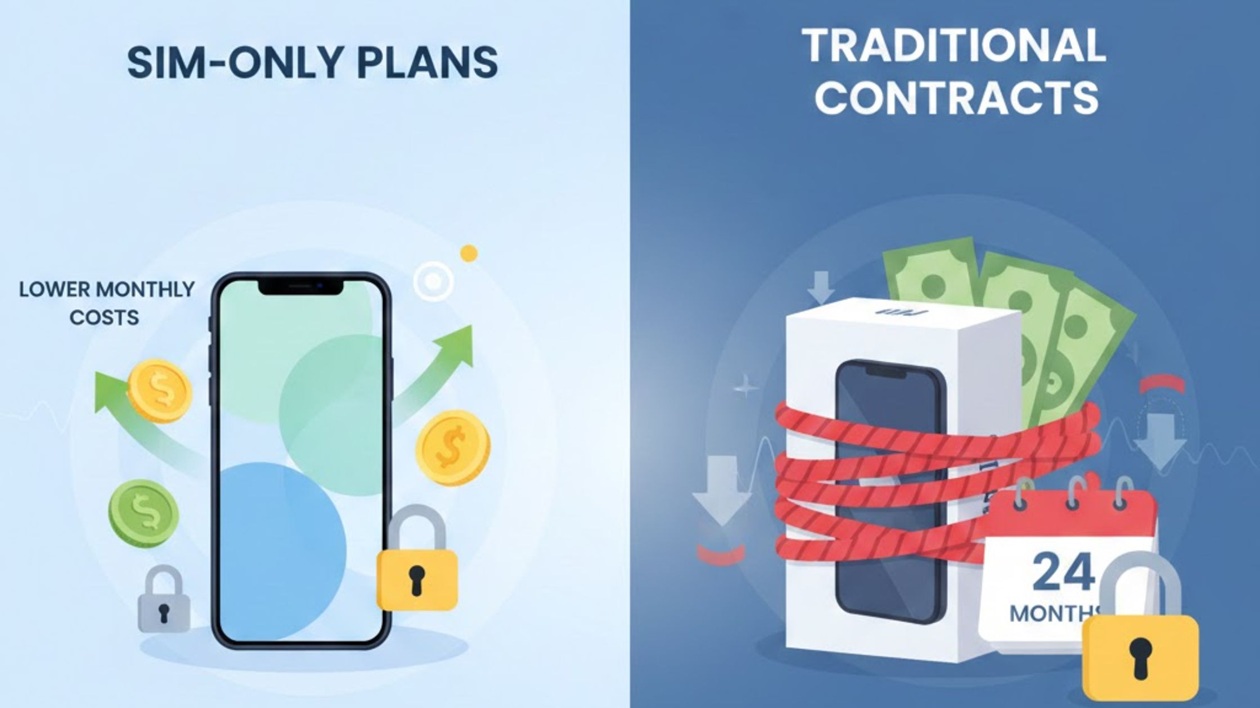
Choosing between a SIM-only plan and a traditional phone contract is one of the biggest decisions you’ll make as a mobile customer. Both options have their place, but they serve very different needs and come with distinct advantages and drawbacks.
Understanding the differences will help you make an informed choice that suits your budget, lifestyle, and long-term requirements. Whether you’re after the latest smartphone bundled with your plan or prefer the flexibility and savings of bringing your own device, there’s a solution that’s right for you. Let’s break down the pros and cons of each approach so you can decide which path makes the most sense.
The Advantages of SIM-Only Plans
Lower Monthly Costs
The most obvious benefit of SIM-only plans is the price. Without subsidising a new phone, monthly costs drop dramatically. You can find plans from as little as £5 per month, while even feature-rich options with generous data allowances remain affordable.
For those who need substantial data, an affordable unlimited data monthly plan can provide everything you need without the hefty price tag of traditional contracts. These plans often include extras like international roaming and calls to multiple countries at no additional cost.
Complete Flexibility
Most SIM-only deals run on 30-day rolling contracts, meaning you’re never locked in. If your circumstances change, a better deal appears, or you’re simply unhappy with the service, you can switch providers with minimal fuss.
This flexibility extends to upgrades too. You can change your phone whenever you want without waiting for a contract to end, and you’re free to buy second-hand or refurbished devices to save even more money.
No Credit Checks Required
Many SIM-only providers don’t perform credit checks, making these plans accessible to students, newcomers to the UK, or anyone rebuilding their credit history. This inclusivity opens up affordable mobile services to people who might struggle with traditional contracts.
The Drawbacks of SIM-Only Plans
Upfront Phone Costs
The biggest hurdle with SIM-only plans is that you’ll need a phone. Buying a new handset outright can cost anywhere from £200 to over £1,000, which isn’t feasible for everyone.
While you’ll save money in the long run, that initial expense can be prohibitive. You might need to consider buying a budget phone, opting for refurbished models, or keeping your current device longer than you’d like.
No Built-In Upgrades
Traditional contracts offer the appeal of a brand-new phone every two years. With SIM-only, you’re responsible for your own upgrades, which requires planning and saving. Some people find this liberating, while others miss the structured upgrade cycle.
The Advantages of Traditional Contracts
New Phone Included
The primary appeal of traditional contracts is getting the latest smartphone without a large upfront payment. You’ll spread the cost over 24 months, making expensive devices feel more accessible.
For people who love having the newest technology or whose phone has given up the ghost, this convenience can outweigh the higher overall cost.
Predictable Monthly Payments
Everything’s bundled into one monthly bill, which some people find easier to manage. You don’t need to think about phone purchases separately or worry about setting money aside for your next device.
Perceived Simplicity
Walking into a shop and walking out with a working phone on a contract feels straightforward. There’s no need to research compatible devices or transfer SIM cards; everything’s sorted in one transaction.
The Drawbacks of Traditional Contracts
Significantly Higher Costs
Traditional contracts are expensive. You’re not just paying for the phone and service; you’re also often covering interest and fees as well. Over 24 or 36 months, you’ll typically pay considerably more than buying a phone outright and using a SIM-only plan.
Long-Term Lock-In
Two- or three-year contracts mean you’re stuck with the same provider even if their service deteriorates, better deals emerge elsewhere, or your needs change. Early termination fees can be substantial, trapping you in an unsuitable arrangement.
Hidden Price Rises
Many traditional contracts include clauses allowing annual price increases linked to inflation. These rises can add significantly to your costs over the contract term, and there’s little you can do about it while locked in.
In contrast, many smaller, SIM-only providers haven’t raised their prices in years and pride themselves on the fact that they will never surprise you with a price hike in the middle of your contract.
You Don’t Own the Phone Immediately
Until you’ve made every payment, the phone technically isn’t yours. This can complicate things if you want to sell it, and you’ll still owe money even if the device breaks or becomes obsolete.
Which Option Suits You Best?
Choose a SIM-only plan if you already own a phone, can afford to buy one outright, value flexibility, want to minimise long-term costs, or don’t need the latest device immediately.
Opt for a traditional contract if you need a new phone urgently, can’t afford the upfront cost, prefer predictable bundled payments, or simply want the convenience of everything sorted in one go.
The Verdict
For most people, SIM-only plans offer superior value and flexibility. While the upfront phone cost can seem daunting, the monthly savings add up quickly, and the freedom to switch providers or upgrade on your own schedule is invaluable.
Traditional contracts still have their place for those who prioritise convenience and new devices over cost savings. However, if you’re willing to plan ahead and potentially keep your phone a bit longer, SIM-only plans will put more money back in your pocket while giving you greater control over your mobile experience.