


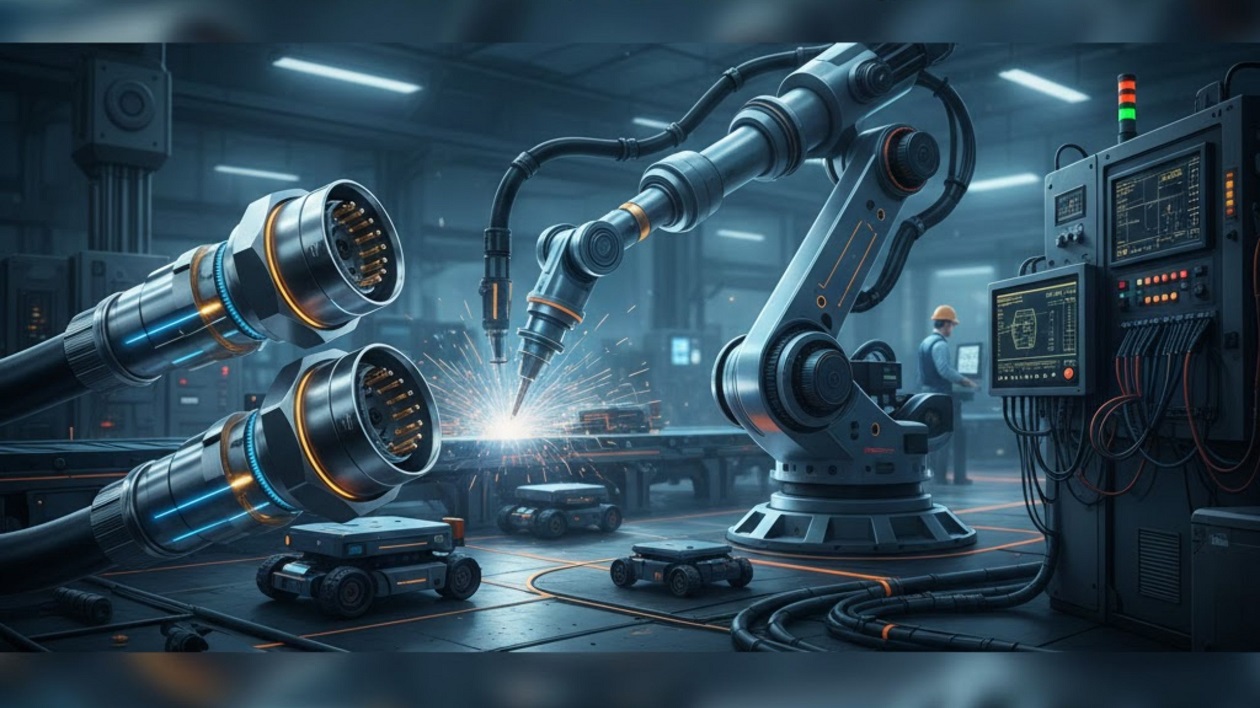
Industrial automation moves constantly. Factories, workshops, and supply chains are increasingly requiring reliable and fast systems. Too many forget a fundamental truth: smart coding and gleaming robotics aren’t the backbone of all this enhanced efficiency. It’s also hardware, that raw layer of physical connection, where mistakes get costly quickly. Ignore this, and even the most advanced machine can come to a halt due to a single faulty link. Therefore, when the industry requires smooth operation, there’s no substitute for components designed to withstand punishment, especially connectors crafted with both performance and reliability in mind.
Endurance at the Core
Manufacturers emphasise durability for good reason. Cheap joints crack; flimsy plastics warp near heat; the wrong metals corrode or spark disaster in damp conditions. Enter the circular connector, a design that refuses compromise. It’s built to withstand vibration, dust, wetness, and spills. These connectors withstand mechanised arms whipping back and forth or conveyor belts pounding endless cycles—result: Fewer stops. Maintenance staff spend less time replacing faulty items and more time maintaining production.
Speed and Precision
Think about how quickly you can talk to someone. This is something that is often forgotten until someone’s dashboard lights up red at 3 a.m. due to incorrect signals. High-performance connectors connect sensors, motors, and controllers, where every millisecond counts. There aren’t just wires knotted together in the hope that they will work; they are designed to be perfectly aligned so that data can reach its destination quickly, without being slowed down by static or lag. And let’s be clear: accuracy is not optional in today’s industries, where margins are shrinking and tolerances are measured in slivers of metal that are thinner than a fingernail.
Adaptability Equals Survival
Could it be that flexibility is not considered important? Consider a modern assembly line that consistently produces new products each month. Connectors must adapt to the ever-increasing complexity of systems, such as robotics upgrades, unannounced additions of vision systems, and automated guided vehicles that may be introduced next Tuesday, as reported in a recent online article. When connectors lack modularity or ease of reconfiguration, costs escalate and downtime increases as engineers attempt to implement unreliable temporary fixes.
Safety Isn’t Just Fine Print
Ignore safety standards at your peril—not merely regulatory box-ticking but real consequences when power surges hit or connections slip loose mid-cycle. High-quality connectors have locking mechanisms to prevent accidental uncoupling, shielding to repel interference from nearby machines that can cause problems, and housing to protect technicians’ fingers from high voltages in control cabinets that are often left open on Friday nights. Risk management from the core makes safety a habit, improving operations.
Conclusion
The industry pushes for faster, tighter tolerances and error-free operations. Sometimes, progress reverts to fundamental principles: building trusting relationships that individuals can rely on, even in the face of pressure. High-performance connectors work quietly, letting everything else shine. Equipment lasts longer, teams focus on invention over emergency repairs, and everyone benefits when reliability becomes routine—the quiet triumph behind every automated discovery worth bragging about tomorrow morning.