


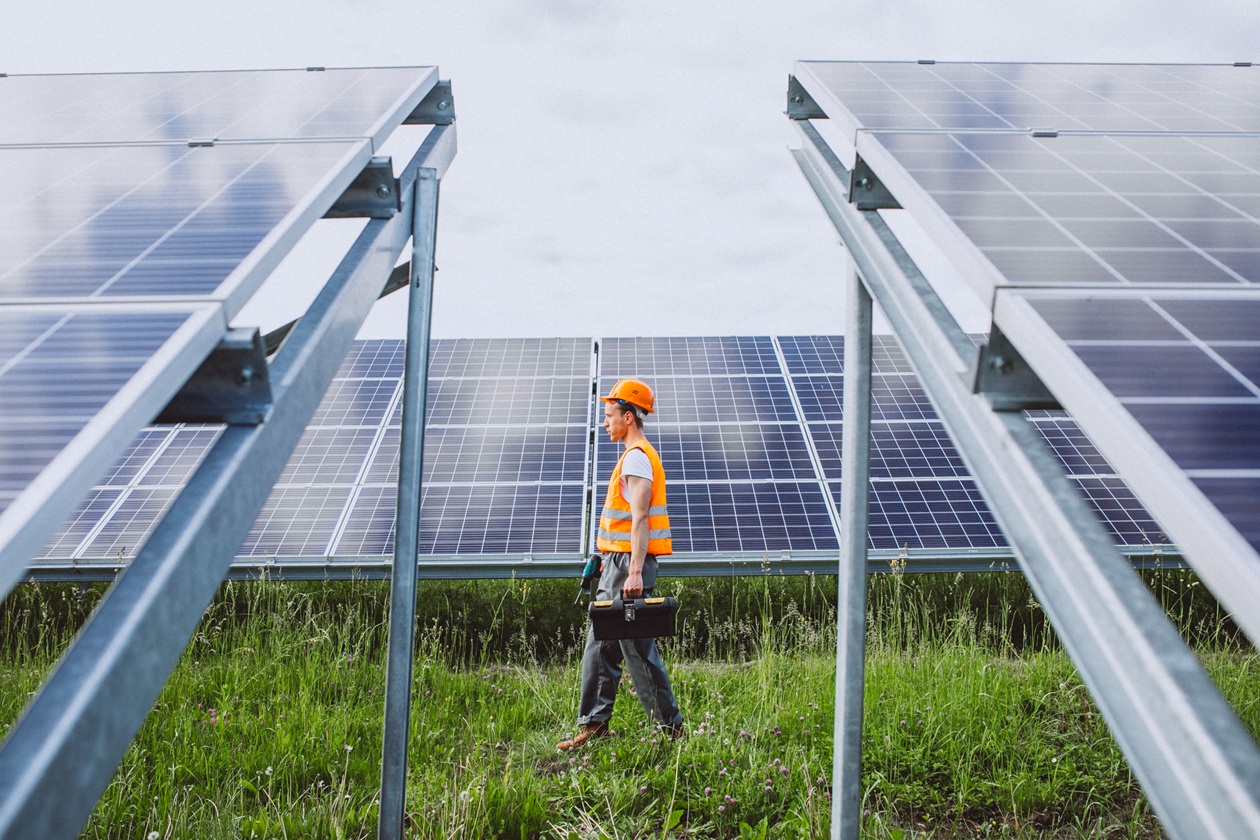
When you invest in solar, you are not simply installing panels on your roof. You are implementing a complete energy system made up of several integrated components, each with a specific role. Understanding these components helps you assess performance, plan maintenance, and evaluate long-term value. A well-designed commercial solar panel system combines generation, conversion, storage and monitoring to deliver reliable, cost-effective renewable energy.
Solar panels: generating electricity
Solar panels, also known as photovoltaic (PV) modules, are the most visible element of your system. Their function is straightforward: they convert sunlight into direct current (DC) electricity.
Solar panels are designed for durability and long operational lifespans, typically exceeding 25 years. Over time, their performance gradually declines at a predictable rate, allowing you to model long-term output with reasonable accuracy.
The size of your solar array will depend on available roof or ground space and your energy consumption profile. A system designed around your daytime demand will maximise usage and improve financial returns.
Solar inverters: converting power for use
While panels generate DC electricity, most properties operate on alternating current (AC). The solar inverter performs the critical task of converting DC electricity into usable AC power.
Without the inverter, the electricity produced by your panels could not power your lighting, equipment or systems.
In addition to conversion, the inverter manages system performance and ensures compliance with grid regulations. It monitors output, detects faults and automatically shuts down in certain safety scenarios. As such, it is both a functional and protective component of your system.
Solar battery storage: increasing flexibility
Battery storage is an increasingly common addition to professional solar installations. Solar panels generate electricity during daylight hours, but you may require power outside these periods or during times of higher electricity tariffs.
A solar battery stores excess energy produced during the day so that you can use it later. This increases your self-consumption of renewable electricity and reduces reliance on the grid.
Most modern battery systems use lithium-ion technology and include advanced control software to optimise charging and discharging cycles. When properly specified, battery storage enhances both flexibility and long-term return on investment.
Mounting systems: securing the installation
The mounting structure supports and secures your solar panels to the roof or ground. Although less visible, it is essential for long-term reliability.
On flat roofs, mounting systems may use weighted ballast to avoid penetrating the roof surface. On pitched roofs, panels are typically fixed to brackets anchored to the building structure. Ground-mounted systems use engineered frames secured into the ground.
A professionally designed mounting system protects both your building and your solar asset, ensuring stability in varying weather conditions.
Metering and monitoring: measuring performance
Accurate data is fundamental to understanding the value of your investment. Solar systems include metering equipment that records how much electricity is generated and, where applicable, how much is exported to the grid.
Monitoring platforms allow you to track performance in real time. You can review daily, monthly, and annual output, compare expected versus actual generation, and identify potential issues quickly.
Understanding your solar power system
A commercial solar panel system is an integrated energy solution rather than a single piece of equipment. The panels generate electricity, the inverter converts it, battery storage enhances flexibility, and monitoring systems provide oversight and control.
When these components are correctly specified and professionally installed, they work together to deliver efficient, reliable, and long-term renewable energy for your property.
Image source freepik