


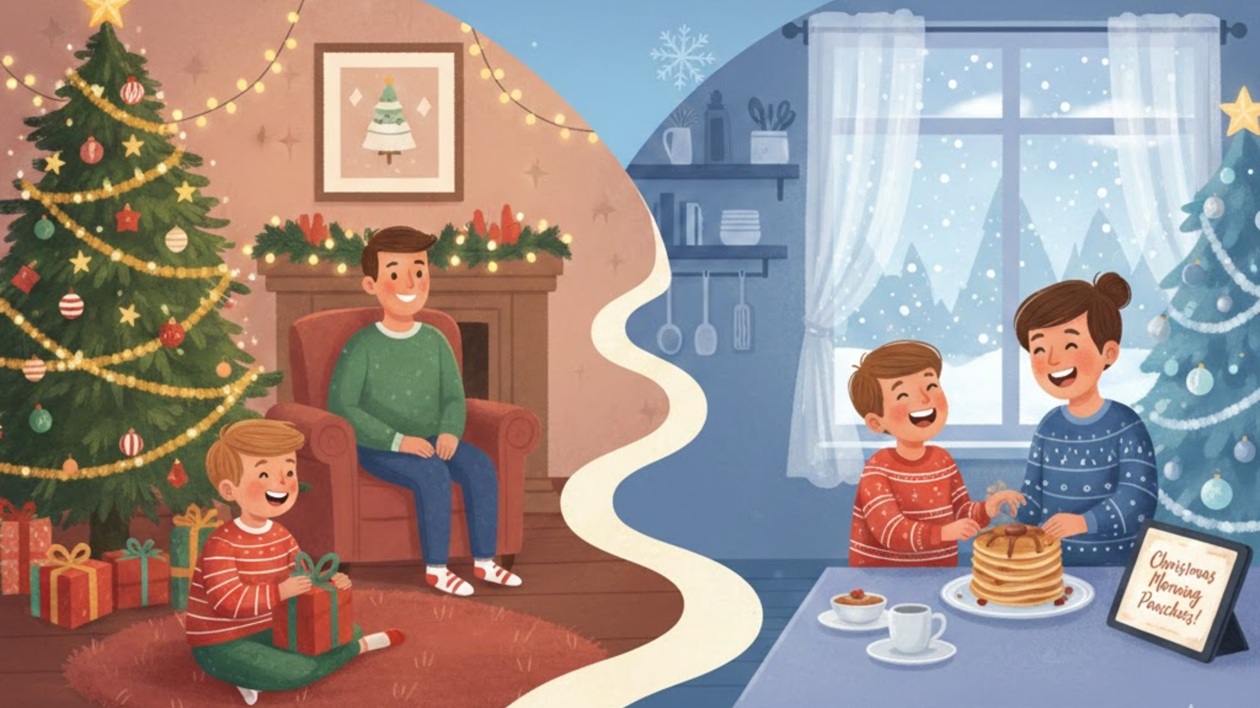
The first holiday season after separation arrives with a particular kind of dread. Parents imagine their children shuttling between homes, missing out on traditions, experiencing something diminished compared to the celebrations they once knew. The mental image of a child opening presents in two different living rooms, neither quite capturing the magic of what came before, can feel like proof that the divorce has broken something irreparable. But this framing misses something important. For many children, two Christmases is not a consolation prize. It is simply a different kind of celebration, one that can carry its own richness if parents allow it.
The Weight of Expectations
Much of the grief around split holidays comes from adults rather than children. Parents carry vivid memories of holidays past and feel the loss of traditions they built over years. They project their own sadness onto their children, assuming the kids feel the same sense of fracture. Sometimes children do grieve the change. But often, they adapt more readily than their parents expect, especially when the adults around them create space for new possibilities rather than mourning old ones.
Children experience time differently than adults. They are less attached to how things used to be and more focused on how things are right now. A child who has two Christmas celebrations sees two trees, two sets of decorations, two mornings of excitement. The comparison to previous years that haunts parents may barely register for a child who lives primarily in the present moment.
Creating New Traditions
The opportunity in split holidays is the chance to build traditions that belong to each household individually. Rather than trying to replicate what existed before, parents can create celebrations that reflect who they are now. Maybe one home develops a tradition of Christmas Eve movies while the other starts a Christmas morning pancake ritual. Maybe one parent embraces elaborate decorating while the other focuses on experiences over things. These differences are not deficiencies. They are the beginning of new family cultures.
Family lawyers Dandenong and other areas often advise clients to approach holiday planning with creativity rather than competition. The goal is not to outdo the other parent or to win some unspoken contest for the better Christmas. The goal is to give children positive experiences in both homes, experiences that do not require comparison because they are different enough to stand on their own terms.
The Logistics of Joy
Practical arrangements for split holidays vary widely. Some families alternate years, with each parent hosting Christmas Day in turn. Others split the day itself, with children spending morning at one home and afternoon at another. Some celebrate on different days entirely, treating December 25th as just one of multiple celebrations spread across the season. There is no single correct approach. The best arrangement is the one that works for your family’s specific circumstances.
Whatever structure you choose, communication matters enormously. Children need to know the plan well in advance so they can anticipate and look forward to what each celebration will involve. Surprises and last-minute changes create anxiety during a season that should feel secure. Coordination between parents, even when the relationship is strained, helps children feel that both homes are working together for their benefit.
Avoiding the Comparison Trap
The temptation to compete with your former spouse intensifies during holidays. It is easy to worry that the other parent will provide more presents, better experiences, or more festive surroundings. This anxiety can drive spending you cannot afford and create pressure that drains joy from the season. Children sense this tension. They know when a parent is performing rather than celebrating.
The antidote is focusing on what you can offer rather than what the other household might provide. Your celebration does not need to match or exceed anything. It needs to feel warm, loving, and genuinely yours. Children remember presence more than presents. They remember feeling wanted and enjoyed. A modest Christmas with a parent who is fully engaged creates better memories than an extravagant one with a parent who is distracted by competition.
Managing Your Own Grief
For the parent who does not have the children on Christmas morning, the day can feel brutally empty. The house is quiet. The traditions you built over years are happening elsewhere. The grief of the separation concentrates into a single day that everyone else seems to be celebrating together. This pain is real and deserves acknowledgement.
Planning for this emptiness helps. Arrange to spend time with friends or extended family. Create your own ritual for the hours when the children are away. Give yourself permission to feel sad without letting sadness consume the entire season. Remember that your celebration with the children will come, even if it falls on a different day. The calendar date matters less than the experience itself.
What Children Actually Remember
Years from now, your children will not remember which parent had them on December 25th in any particular year. They will remember whether the holidays felt happy or tense. They will remember whether their parents seemed joyful or stressed. They will remember the traditions that emerged after the divorce, the new rituals that became familiar and beloved over time. They will remember feeling loved in two homes rather than incomplete in either.
Reframing split holidays is not about pretending the situation is ideal. It is about recognising that children are resilient, adaptable, and capable of finding joy in arrangements that look different from the conventional picture. Two Christmases means two celebrations, two sets of people who love them, two homes where they belong. When parents approach this reality with generosity rather than grief, they give their children permission to embrace it too. The holidays after divorce are not lesser. They are simply different, and different can become wonderful in its own right.