

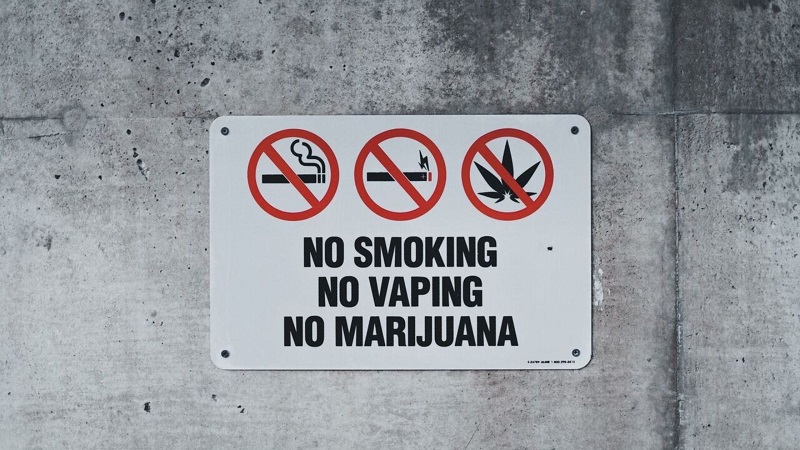
The no smoking policy at work isn’t really doing anything substantial to avoid the issue of vaping that’s getting out of control. The default is that it’s permitted, in fact. The practical fix is implementing a workplace vaping policy with signs that actually says what’s allowed, and where.
The legal gap catching out employers
HR teams have a tendency to assume vaping is covered by the same rules as smoking. It isn’t. Vaping didn’t properly exist like it does today when the Health Act 2006 smoking ban came in. So, it applied to what was relevant, which was smoking tobacco or another substance. Legally, that means combustion, and it was mostly concerned with secondhand smoke.
E-cigarettes produce vapour, not smoke, so they fall outside the ban. No offence is committed by an employee vaping indoors unless the employer has actually put a rule in place saying otherwise. Silence isn’t a neutral position on this because it’s a default in the employee’s favour and it will stay that way until someone writes a policy to mandate otherwise.
That gap in government policy matters more each day as vaping grows in popularity. ASH’s most recent Smokefree GB survey puts current vaping at 10% of adults in Great Britain (around 5.5 million people).
Scaled down to office size, that’s one vaper in every ten-person team, yet many HR departments still have no official policy on the matter. Smoking has actually fallen during that time, down to 11% from the 13% for four years running. Around three in five vapers used to smoke and have now quit, while just under a third just do both.
Making the policy actually hold up
So given there’s no statutory requirement to have a vaping policy, it means the legal weight of any restriction rests completely on how it’s framed. Employers are entitled to issue a
reasonable management instruction like a clear rule, so long as it’s communicated in advance and applied consistently.
The Health and Safety at Work Act 1974 gives that instruction real teeth. It asks employers to protect the health, safety and welfare of employees and anyone else affected by the business, so far as reasonably practicable, which extends to visitors and contractors as much as staff. Where someone raises a genuine concern about vapour exposure, even if it’s not as unhealthy as secondhand smoke, that general duty converts into a slightly more specific one: a risk assessment under the Management of Health and Safety at Work Regulations 1999. Never wave a complaint away informally.
This ends up being less about legal drafting than about paperwork discipline. You need a dated policy and a record of how and when it was communicated to staff. Then, signage on site that matches the written rule rather than contradicts it or misses the mark.
Signage ends up doing more than the policies give it credit for because it’s something visible to every employee, every day. It’s something that makes people feel more awkward and guilty for being a rule-breaker because the evidence is right there, reminding them, meaning playing dumb is less of an option.
Some employers are folding the paperwork side into the same systems they already use for broader HR compliance tracking. Platforms that log policy versions and staff sign-off alongside payroll and everything else HR already has to be able to prove it did.
Where enforcement gets legally risky
Two situations are where a vaping policy actually ends up getting tried and tested, and neither is about whether the policy exists. It’s about what happens once someone breaks it.
The first is disciplinary overreach. Dismissal for vaping is legally possible, but it has to survive the same fairness tests as any other conduct dismissal (a genuine belief in misconduct, reasonable grounds, a proper investigation, assessed against the Burchell test,
backed by the ACAS Code of Practice). A single instance of indoor vaping on a first offence isn’t going to cut it – dismissal may not go down well in the office and tribunals expect to see prior warnings. Unless, that is, if it was a real safety risk like vaping near flammable stock. A policy that treats a first breach as gross misconduct is building in a challenge before it’s even been enforced once.
The second is where a blanket ban then has to meet an individual circumstance. Nicotine addiction on its own doesn’t meet the Equality Act 2010 definition of disability, so a policy doesn’t need to accommodate vaping purely because someone finds it hard to stop. But the analysis changes if vaping intersects with something that does qualify, like an employee managing a diagnosed respiratory condition, or using vaping as a documented part of quitting smoking under medical or occupational health guidance. It’s a tool, after all, for addiction.
A rule that’s entirely reasonable in general can still need a recorded exception in that kind of case, and a policy that hasn’t anticipated the question in advance tends to make a worse call under pressure than one that has.