

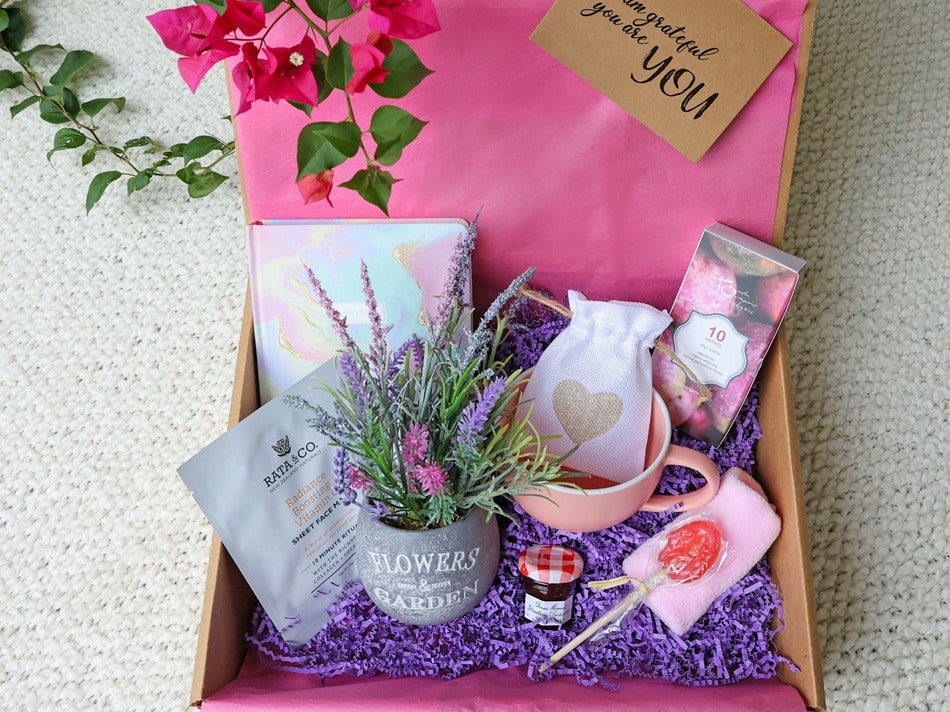
A care package that goes to someone in crisis can be worth its weight in gold. It can also be a paperweight that won’t leave the house for five years. The difference between the two can often be traced back to one question: Does this require anything from them?
The best care package treats are the ones that don’t ask the recipient to cook, assemble, store, display, or water anything. They just land on the person’s doorstep and immediately get to work.
Understanding what the recipient is actually going through
Before making any purchases at all, take a moment to consider what kind of tough time it is. A care package for someone after an operation has different needs than a care package for someone going through a massive change, or someone in the first throes of grief.
The five stages of grief – denial, anger, bargaining, depression, acceptance – aren’t a strict progression, but they’re a guide. Someone who’s just lost something is often in a reality that feels distinctly unreal; they don’t need distractions at that point, they need blankets of warmth to wrap themselves in. Distractions come a bit later, when the cold and the emptiness start to seep through. And people dealing with a long loss need regular, plentiful supplies of comfort. It doesn’t have the instant relief of distraction, but it doesn’t run out after a movie or an ice-cream either.
Also, listen to what they’re actually saying – “I can’t sleep”, “I’ve not been eating”, “I can’t even get myself to cook something”. Those are direct instructions. They’re literally saying what they need in the box.
Build around the five senses, not a theme
Many ordinary care packages are often based on one overarching theme – spa day, movie night, self-care Sunday. Unfortunately they mostly engage one or two sensory elements, limiting the deep relief a five-senses experience can provide.
Echoing a grounding coping skill used in anxiety and trauma work, the 5-4-3-2-1 method asks you to name five things you can see, four things you can touch, three you can hear, two you can smell, and one you can taste. Engaging the five senses can help yank the nervous system out of fight-or-flight mode and back into the reality of the present. A good care package will do the same.
Sight: Send gentle, inviting colors that glow rather than glare, that breathe rather than push. Think calming ocean blues, warm candlelight creams, natural mossy or leafy greens. Avoid anything too visually busy or aggressively cheerful.
Touch: This is the one we usually forget. A pair of thick cashmere socks, a weighted eye pillow, a nubbly, substantial lap blanket – these are all items that activate what researchers call somatic empathy. Feeling soothed from physical comfort is sometimes the simplest translation to feeling soothed from emotional distress.
Flavor: rather than fancy or gourmet items, include comfort flavors. Good quality chocolate, cookies, easy snacks like miso soup sachets or a pot of honey. Ready-to-eat, zero-prep, and delicious.
Smell: A small pot of lavender, a bag of eucalyptus, a box of chamomile tea. A bundle of fresh herbs. Scent is directly wired to the limbic system of your brain, the part responsible for emotion and memory. The right smell can cut through anxiety like nothing else. A small oil roller with lavender, a good candle, or a bundle of fresh herbs will go further on memory and emotion per dollar than most anything else you’ll include.
Sound: the hardest to pack but a note written and taped to a QR code for a playlist is a nice addition that costs nothing but a few minutes of thought.
Why fresh flowers belong in every care package
Flowers have been the go-to gift during times of sympathy for good reason across cultures and centuries. It’s not simply a matter of habit. There’s real science that demonstrates the comforting, calming impact of surrounding yourself with fresh blooms. In fact, a study in the _Journal of Physiological Anthropology_ showed that intentionally engaging with indoor plants and fresh flowers can facilitate physiological and psychological relaxation. In real terms, this means that plant and floral interaction in the study reduced autonomic nervous system activity and diastolic blood pressure and elicited comfortable, soothed, and natural feelings among study participants.
The idea behind this is biophilic design, which posits that humans genetically respond positively to natural settings as part of their biological makeup. Flowers and plants can help manage mood and speed recovery for the simple reason that being adjacent to nature is good for you. In color, form, and in living scent, they are a low-effort way to bring new life to virtually any setting imaginable. They bring a colorful, organic, calm feeling that takes the edge off a sterile hospital room, or a cluttered bedside table, or an office nook. The stresses will still be there, but the plant is just one less thing. No harm.
The gesture only works if there is no hassle involved. Flowers dumped on arrival in a bucket so the recipient has to scrabble for a vase, flowers wrapped tight in plastic with nothing but a tear strip – feels insensitive. You’re better off working with a trusted Melbourne florist who will guarantee the flowers show up on the doorstep fully hydrated in a proper vase, both beautiful and harmonizing, as though they were waiting there all along. No decisions. Sitting on the sill without a care.
If timed delivery or shedding petals is a worry (and the last thing you want is something to worry about), go with easy-to-keep-alive botanicals that only need a green thumb and a will to live. People who would be out of the house or otherwise indisposed can be given pothos, snake plants, or the ubiquitous succulents, each of which will cheerily survive long into the future with only the tiniest of attention paid to their care.
Tailor the contents to the specific hardship
Physical illness or recovery: It’s so important to stay hydrated when you’re sick or in a healing body, but a bottle of water isn’t going to lift their spirits. Think herbal teas, electrolyte sachets, coconut water. Throw in a really good lip balm and a gentle hand cream because skin takes a hit when you’re under the weather. Soft tissues (scented ones are lovely), a heat pack or cold compress.
Things to lift spirits: a collection of short essays, a simple puzzle, an audiobook of something fun with short episodes. You don’t want them to have to be sitting up or concentrating hard or feeling productive. No one on their sickbed was ever healed by sitting up properly and finally writing that novel.
Grief and emotional loss: People in the first few weeks of deep grief often can’t eat and seldom sleep but you should include a couple of easily edible items that require no thought on their part – a really good chocolate bar, a sleeve of crackers and a little pot of nut butter, small packets of mixed nuts.
Also comforting scents – a candle, fresh eucalyptus – since the limbic system that governs emotion and memory isn’t rational and the strongest memories are sensory. The smell of that candle can anchor them to the present when everything else seems unreal.
A memory journal with some gentle prompts is worth adding, but on the whole don’t expect it to be opened for a few weeks yet. Grief needs to find somewhere to go.
Job loss or life transition: You want this to feel indulgent rather than like an intervention. Something they wouldn’t buy themselves. A really good coffee. A box of that specialty tea. Something from the bakery they love. The message shouldn’t be ‘You need this’ but ‘You deserve this’.
The message on the card matters more than most people think
Many sympathy cards are unsuccessful because they are too general or inadvertently diminish a person’s feelings. For example, “Let me know if you need anything” seems kind but actually shifts all the work to the person in crisis. They have to think of a need, frame it as a request, and potentially feel like a burden. They will not ask you. The ‘generous’ offer disappears.
Steer clear of comments that suggest there is a greater meaning to their loved one’s death: “Everything happens for a reason”; “This will make you stronger”; “At least…”. In therapy, these are known as toxic positivity and they all imply that the griever should not feel as upset as they do.
The easiest thing to say is validation and then a practical suggestion. For instance: “I’m not going to ask you to do anything. I’m dropping groceries on your porch Thursday evening – you don’t have to answer the door.” Or: “You don’t have to reply to this. I just wanted you to know I’m thinking about you and I’m not going anywhere.”
Cements your support, does not add to their work or worry. That’s the formula.
Delivery method and timing
How you choose to deliver a care package is something we often don’t spend much time considering. But it can matter. If someone is in the early, raw phase of a full-out loss, sometimes what they need most seems to be to have their isolation respected. Mailing a package, or leaving it on a doorstep without ringing the bell, can honor that without abandoning them.
As things evolve, a hand-delivered drop-off – where you leave the package and go, and tell them in advance you’re not expecting company – can often feel kinder than a parcel from the courier. It is just warmer. The fact you show up – even if it is merely for a heartbeat – can often communicate things that the mail can’t.
Then there is the part about when they can matter. The days right after a loss or scary diagnosis often get filled right up by kindness, so it’s often the second and third week that are the very hardest for the person when all the adrenaline has left someone’s system, and most the phone calls and visitors have drifted away. That’s often when a package can work magic. If you can just do one, consider waiting.
What not to include
Decision fatigue is a real thing. When you’re in crisis, the mental energy you’d normally use to make small decisions – what to eat, where to put something, how to respond to a message – is already exhausted. Anything which requires effort from the recipient is a burden, no matter how lovingly meant it is.
Avoid complicated DIY kits, subscription services with sign-ups, gift cards to stores requiring the person to go out, high-maintenance plants, and anything bulky or difficult to store. A huge, gorgeous floral arrangement in a breakable vase is no comfort if it’s causing the person distress worrying about knocking it over.
The best care package is something the person can immediately open and use and feel held by – without having to do a single thing in return.