

There was a time, not so long ago, when a car communicated its problems in the most inconvenient way possible. A strange noise that appeared without warning, a warning light that illuminated on a motorway at night, a breakdown that arrived with no prior indication that anything was amiss. The relationship between driver and vehicle was fundamentally reactive, defined by the gap between a problem developing and the moment it became impossible to ignore.
That relationship is changing. The combination of increasingly sophisticated onboard sensor networks, connected vehicle technology and artificial intelligence-driven diagnostic platforms is shifting the dynamic from reactive to predictive, giving drivers and mechanics access to information about vehicle health that was simply not available a generation ago. The car that tells you what it needs before it breaks is no longer a concept from a technology conference. It is the vehicle sitting in millions of driveways right now, quietly generating data that most of its owners have never thought to access.
The Sensor Revolution Hiding in Plain Sight
Modern vehicles contain hundreds of sensors monitoring parameters across every major system simultaneously. Engine temperature, oil pressure, fuel trim, oxygen sensor readings, brake pad wear, battery state of charge, transmission fluid temperature and dozens of additional data points are measured continuously and fed into the vehicle’s onboard diagnostic system, which evaluates them against expected operating ranges and flags deviations that indicate developing problems.
This data infrastructure has been building quietly for decades. The OBD2 standard, which mandated a standardised diagnostic port on all vehicles sold in major markets from the mid-1990s onwards, created the foundation for a diagnostic ecosystem that has expanded dramatically as the sensor density and processing capability of modern vehicles has increased. What began as a system for monitoring emissions-related parameters has evolved into a comprehensive vehicle health monitoring platform that covers virtually every major system.
The gap that has existed until recently is between the data being generated and its accessibility to drivers. Warning lights communicate the presence of a fault but not its specific nature or severity. The fault codes that triggered those lights were readable only with diagnostic equipment available primarily to professional workshops. The vast majority of the actionable information that vehicles generate has remained locked away from the people who own and drive them.
How Accessibility Is Changing the Game
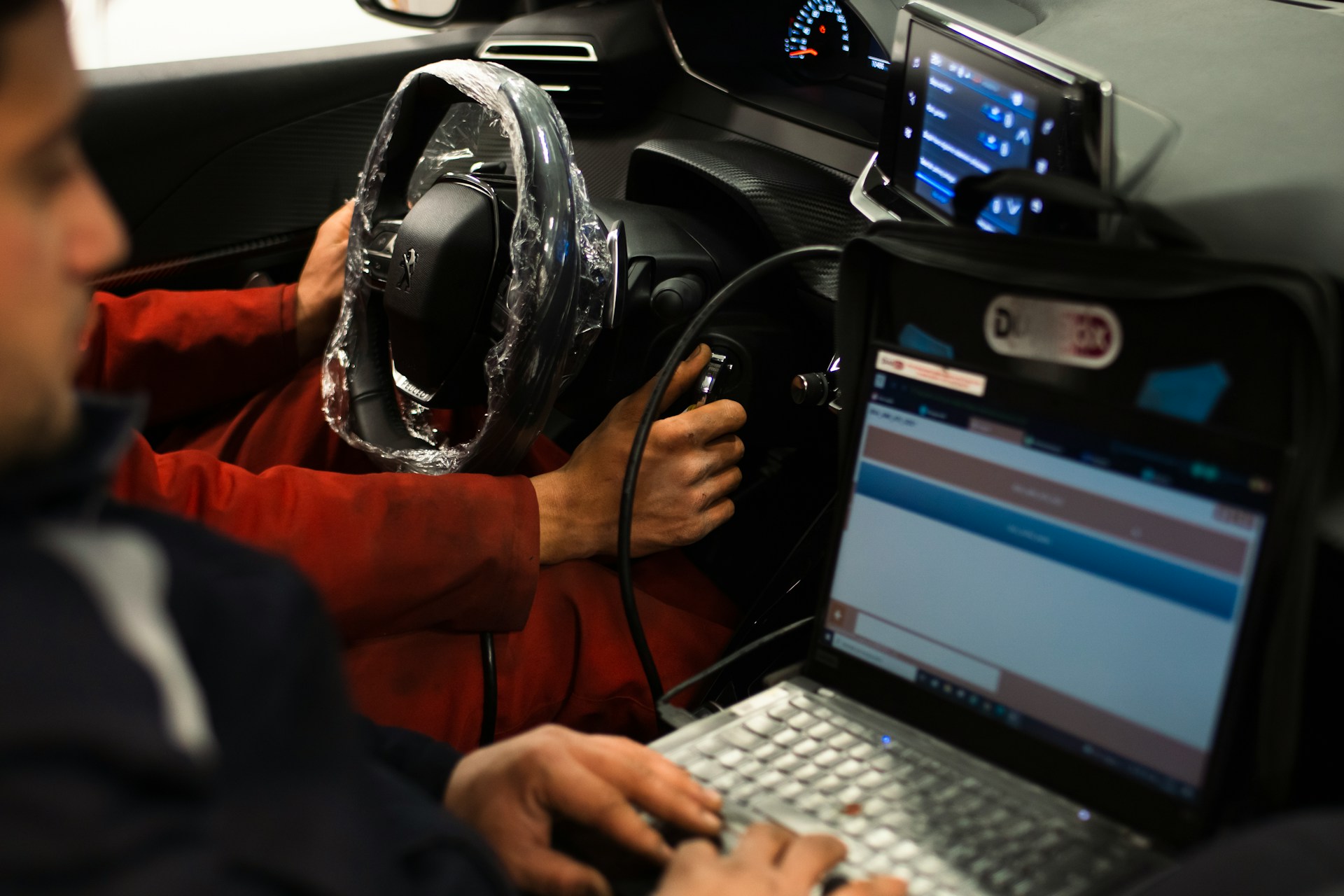
The democratisation of vehicle diagnostic data is one of the more consequential and least discussed technological shifts in the consumer automotive space. Inexpensive OBD2 adapters that plug into the diagnostic port and connect wirelessly to a smartphone have made it possible for any driver to read the fault codes, live sensor data and system status information that previously required a workshop visit and a professional scanner.
Applications that interpret this data and present it in language accessible to non-specialists have extended the reach of diagnostic capability further still. A driver who receives a notification from their vehicle monitoring app that the oxygen sensor is reporting readings outside the normal range, accompanied by an explanation of what this means and what the likely consequences of ignoring it are, is a driver who can make an informed decision about when and how urgently to seek a repair, rather than waiting for a warning light to illuminate or a problem to manifest as a driving experience issue.
The implications for vehicle maintenance costs are significant. According to the American Automobile Association (AAA), the majority of roadside breakdowns involve mechanical failures that showed measurable warning signs in the weeks or months preceding the failure event. Accessible diagnostic data gives drivers the means to identify and act on these warning signs before they become failures, converting expensive emergency repairs into planned maintenance interventions at a fraction of the cost.
Predictive Maintenance and the AI Layer
The next layer of sophistication above basic diagnostic data access is predictive maintenance, where artificial intelligence algorithms analyse patterns in vehicle sensor data to identify developing problems before they generate fault codes or manifest as noticeable symptoms.
This approach draws on the same principles that have been applied in industrial and aviation maintenance for years, where sensor data from complex machinery is continuously analysed against historical failure patterns to predict component failures before they occur. Applied to the consumer automotive context, it means that a vehicle’s onboard systems or a connected cloud platform can identify, for example, that the pattern of variation in a particular sensor reading is consistent with a bearing that is beginning to fail, weeks before that failure would become apparent to the driver or detectable through conventional diagnostic methods.
Several vehicle manufacturers have integrated predictive maintenance capabilities into their connected vehicle platforms, providing owners with advance notification of recommended service actions based on actual vehicle condition data rather than fixed mileage or time intervals. This condition-based approach to maintenance scheduling is more efficient than interval-based servicing, addressing components when they actually need attention rather than at arbitrary intervals that may be conservative for some vehicles and insufficient for others.
The practical consequence for drivers is a maintenance experience that is more personalised, more precise and more cost-effective than the conventional approach. A vehicle that tells its owner that the battery is showing signs of reduced capacity and should be tested before winter, or that the transmission fluid temperature profile suggests a fluid change should be scheduled within the next few thousand miles, is a vehicle that is actively helping its owner avoid the expensive surprises that define the reactive maintenance experience.
What Smart Diagnostics Mean for the Used Parts Market
The intersection of smart diagnostics and the used parts market is an area that deserves particular attention, because the two are more connected than they might initially appear. Accurate diagnostic information about the specific component that has failed or is failing is the starting point for an efficient parts sourcing process, and the quality of that information directly affects the speed and accuracy of the subsequent repair.
A driver who knows, from their diagnostic platform, that their vehicle’s crankshaft position sensor is failing has a specific and actionable parts requirement that can be searched immediately on a used parts platform. A driver who knows only that their car is not running well has a much less efficient path to the same resolution. The precision that smart diagnostics provide upstream makes the entire downstream process of finding and sourcing the right replacement component faster and more reliable.
For major mechanical failures where smart diagnostics have identified engine wear patterns that suggest the engine is approaching the end of its serviceable life, the used parts market provides the most cost-effective replacement option for most drivers. Platforms offering used car engines for sale from thousands of verified sellers allow drivers to search for compatible replacement units with the specific engine code identified by their diagnostic system, bringing the precision of smart diagnostics directly into the parts sourcing process.
The Professional Mechanic in a Smarter World
The rise of smart diagnostics does not eliminate the role of the professional mechanic. It changes it, in ways that most experienced technicians regard as broadly positive. Better diagnostic data means faster and more accurate fault identification, less time spent on exploratory diagnosis and more time spent on the actual repair work that generates value for both the customer and the workshop.
According to McKinsey and Company, the integration of connected vehicle data into professional workshop diagnostic workflows is one of the most significant efficiency opportunities in the automotive service sector, with the potential to reduce diagnostic time substantially and improve first-time fix rates across a wide range of repair categories. Workshops that invest in the tools and training to make effective use of connected vehicle data are positioning themselves ahead of a competitive shift that will disadvantage those who do not.
The driver who arrives at a workshop with a clear diagnostic report from their vehicle monitoring app, identifying the specific fault code and the sensor data pattern that preceded it, is also a more informed customer who is better placed to have a productive conversation about the appropriate repair rather than simply accepting whatever diagnosis the workshop provides. This informed customer relationship benefits both parties and is one of the more underappreciated consequences of the smart diagnostics revolution.
A Shift That Is Already Under Way
The transition from reactive to predictive vehicle maintenance is not a future prospect. It is a shift that is already under way across the global vehicle fleet, accelerating as connected vehicle technology becomes standard equipment rather than a premium option and as the applications that make diagnostic data accessible to non-specialists continue to improve.
The drivers who engage with this shift, who invest in a basic OBD2 adapter, who pay attention to the data their vehicle is generating and who act on early warning signs before they become failures, are the ones who will experience the most significant reduction in unexpected repair costs and the most reliable vehicle ownership experience.
The car that tells you what it needs before it breaks is not a luxury. In 2026, it is the vehicle most drivers already own. The question is whether they are listening.