


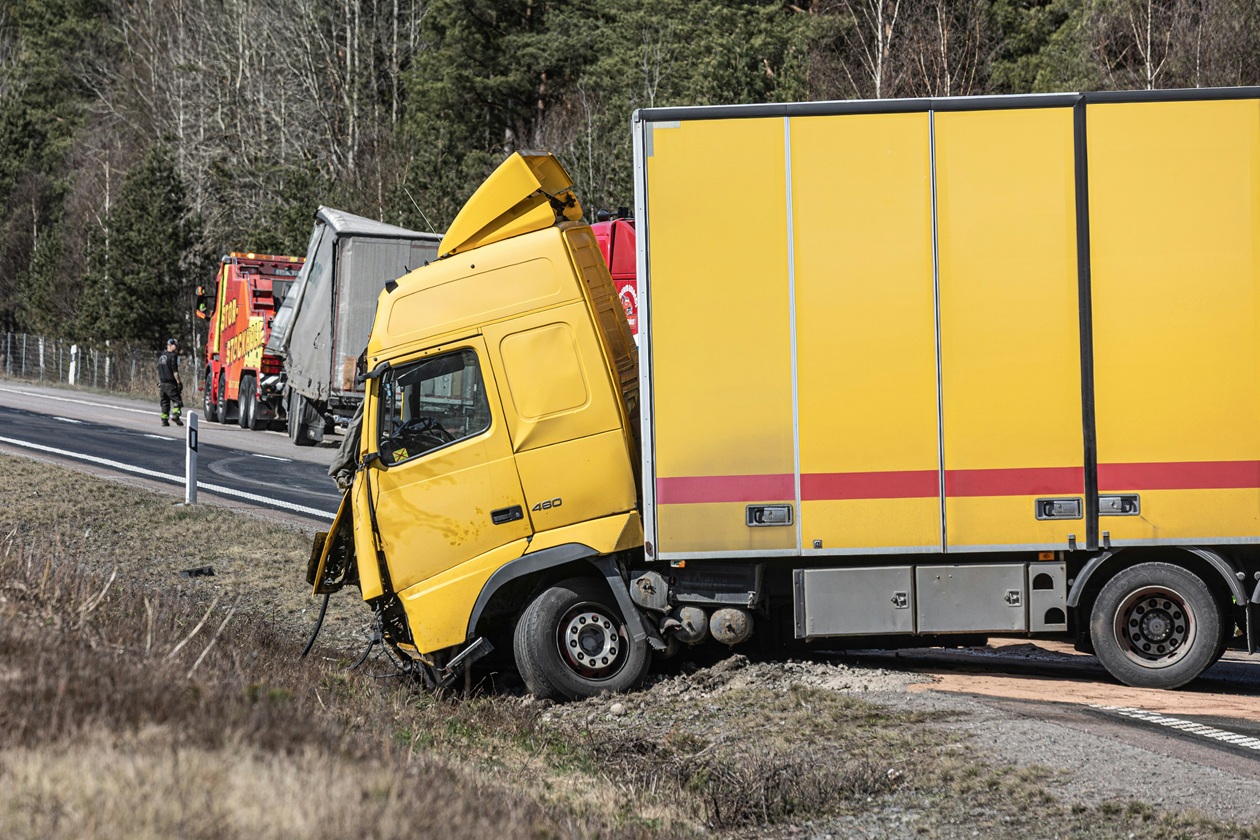
Why Truck Accident Cases Involve Far More Than Two Drivers
Typically, when you’re in a car crash, the legal process looks fairly simple, two drivers, two insurance companies, one crash. Truck wrecks just aren’t that simple. The second a semi-truck is involved, you’re not dealing with a person, you’re dealing with a corporate entity, federal motor carrier compliance data, and an entire defense firm whose entire reason for existing is to handle these cases.
The Evidence Disappears Faster Than Most People Realize
Truck accident cases become time sensitive in a manner that car accidents never are.
Federal regulations require trucking companies to keep “driver’s record of duty status” (logs), inspection records, and other data for just six months. The rest, they can destroy. If their records are not put on a legal hold, trucking companies will also be happy to write over black box data captured Event Data Recorders in the truck (the truck’s equivalent to an airplane’s black box showing speed, braking activity, and other engine functions immediately before a crash).
Before you can file that lawsuit, you first send a spoliation letter (or, letter of protection) putting the company on formal notice that they are not allowed to destroy anything that could help prove what happened. Securing legal support after a truck accident early isn’t just about strategy, it’s the only way to ensure that letter gets sent before the trucking company’s standard data retention policy does the work for them.
The Web of Defendants No One Warns You About
In a minor car accident, one person is usually at fault. In a truck crash, you can have four or five parties sharing the blame before anyone immediately recognizes a police report.
There’s the driver. He has his own insurance company. If he works for a trucking company, the trucking company can likely be held responsible for his negligence under the legal theory of respondeat superior, which says that an employer is responsible for the actions of its workers on the job. So now you have a second party and insurance company.
If the cargo was loaded by a separate, third-party warehouse, and the method of loading caused a weight imbalance that contributed to the rollover, the loading company could be brought into the lawsuit as a third defendant, with their own insurance company and legal representation. Now you have three. If a tire blowout was the cause of the crash, and the tire was defective, the tire manufacturer becomes a product liability defendant. Now you’re up to four.
Commercial Insurance Changes the Stakes Entirely
While a personal auto policy might include liability limits of $50,000 to $100,000, commercial trucking policies often reach millions. This seems like positive news for an injured person but it also has a downside.
When the possibility of a million-dollar policy settlement exists, the insurance company sends out its high-powered defense lawyer, retains accident reconstruction consultants, and uses a scorched-earth legal defense strategy. This isn’t because they don’t like the injured person; it’s because they have so much to lose. This environment can be intimidating or even overwhelming if he or she doesn’t realize what’s coming.
Federal Regulations Create a Different Legal Standard
Trucking companies are not only responsible for adhering to the state traffic laws. There is a set of federal regulations by the Federal Motor Carrier Safety Administration that determines the eligibility of drivers, vehicle maintenance, cargo loading, and securement regulations. 13% of commercial drivers involved in accidents are fatigued (FMCSA).
Why this matters is when a trucking company has broken an FMCSA regulation, that breach can then lead on to negligence per se, which is a much higher legal standard in comparison to normal carelessness. You’re not trying to prove that the driver was acting carelessly in a general manner. You are trying to prove that they have violated a specific federal rule and the rule was generated to prevent exactly the type of accident that took place.
For example, the violations of the Hours of Service regulations. Electronic Logging Devices specifically record the driver’s on-time activity. If these records indicate that the driver has exceeded federal drive-time limits, this not only builds the case, but altogether could develop a major legal incident.
Accident Reconstruction is a Technical Discipline, Not a Guess
Establishing liability in a truck accident is often about more than just the word of witnesses. Engineers will evaluate the performance of the air brakes and measure the “brake lag” distance at the scene. They will examine the distribution of weight across the axles to see if improper loading of cargo led to a jack-knife. Engine control modules produce the type of objective, pinpointed data that specialized analysts can use to determine exactly the condition of the truck right up to the time of the crash.
CDL drivers are subject to a behavior code vastly more comprehensive than ordinary license holders. Accordingly, history, prior violations, license suspensions, whether the trucking company had any reason to determine “negligent entrustment” in this driver, is all admissible.
This is a forensic process, not a negotiation over who bumped into whom.
When a trucking company is involved as a defendant, they’ll bring all the advantages that come from a well-funded, deeply-resourced corporation. They’ll have reputable counsel and experts at their disposal, and they’ll aim to minimize their payout to you. Trucking cases are not “unwinnable” as a result, but they certainly are “time is of the essence.” The longer that goes by till you get good legal counsel, the more of an uphill battle it becomes to secure and develop the evidence.